How to Store Cardboard Recycling in a Small Apartment
Disclosure
This post may contain affiliate links. If you purchase through these links, I may earn a small commission at no extra cost to you. As an Amazon Associate I earn from qualifying purchases.
A delivery box takes seconds to empty, but the packaging can linger for days. Flattened boxes slide out from beside the trash can, collect behind a door, or become an awkward armful when you finally take them downstairs.
Cardboard recycling storage works best when the same setup keeps boxes contained and makes them easy to remove. For occasional deliveries, that might be one sturdy box holding smaller flattened cartons. If you carry recycling down stairs, a reusable carrier that fits the cardboard may be more useful.
Before buying an organizer, work out three things: the size of your flattened boxes, where they can wait without obstructing anything, and how you will carry them to the collection point.
Flatten the Boxes Before Choosing a Storage Spot
An empty shipping box still occupies almost its full delivery footprint until you open its seams. Choosing storage around intact boxes can make a small amount of recycling seem like a much bigger storage problem.
Remove the contents and separate loose packing materials first. Open the taped bottom seam, fold the box flat, and put foam, plastic film, and other packaging into their appropriate disposal streams.
Flatten recycling-bound boxes as you unpack them, rather than saving the whole job for collection day. It is easier to find room for one flat carton than to keep making space around several empty cubes.
Keep cardboard intended for recycling dry and separate from wet household waste. Check your local collector’s instructions for food-soiled cardboard, tape, labels, and other preparation requirements.
Separate Pending Returns From Recycling
A box you still need for a possible return has a different job from an empty carton waiting to leave.
Keep the necessary packaging with the item, or in one designated return area. Check the seller’s return requirements before discarding inserts or flattening packaging you may need.
Once you decide to keep the purchase, move the unwanted packaging into the recycling system. Otherwise, “I might need that box” can gradually turn your recycling spot into permanent storage.
Choose a Container That Holds the Stack Together
You do not automatically need a purpose-made cardboard organizer. Start with something you already own, then check whether it solves both containment and removal.
A Sturdy Box for Occasional Deliveries
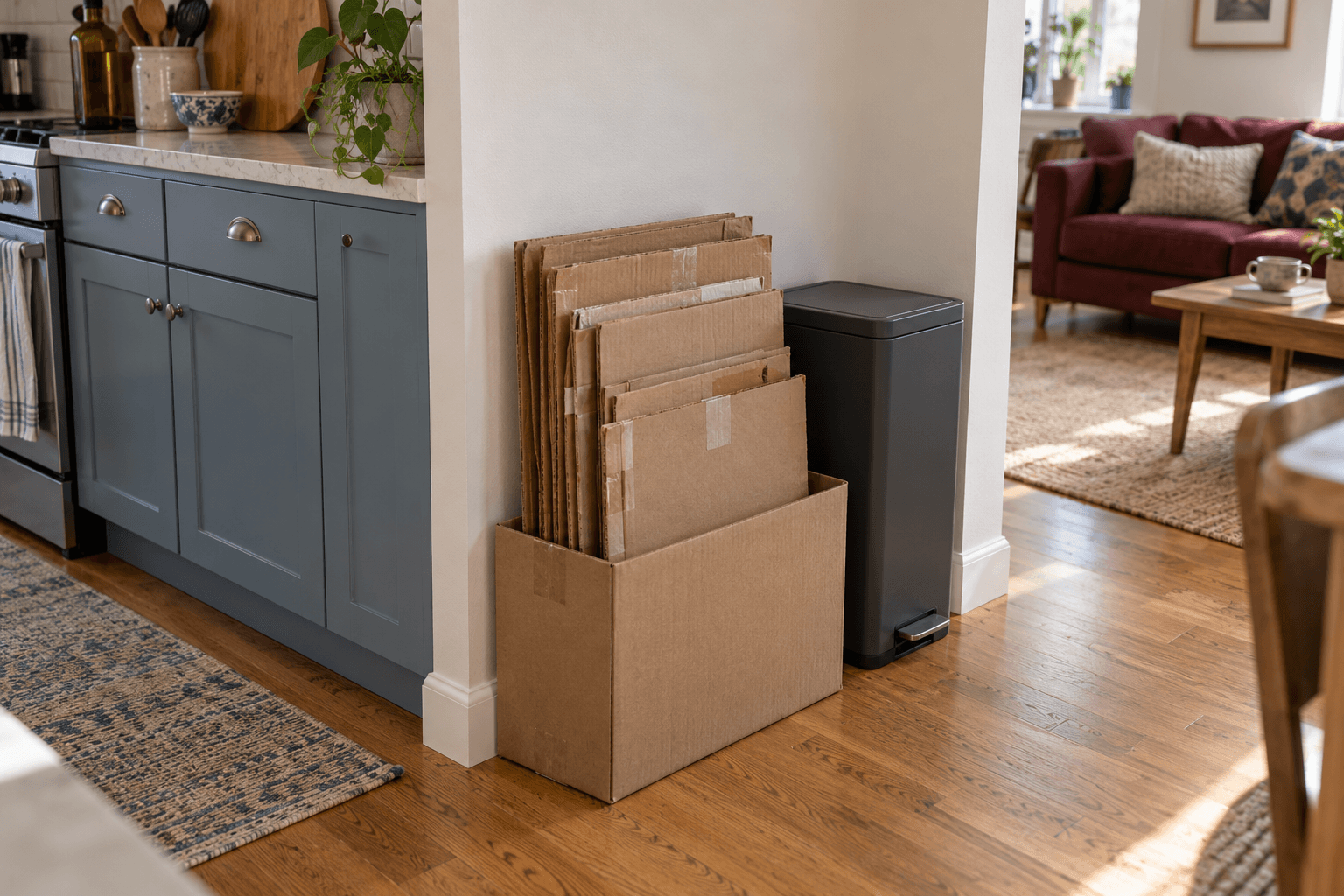
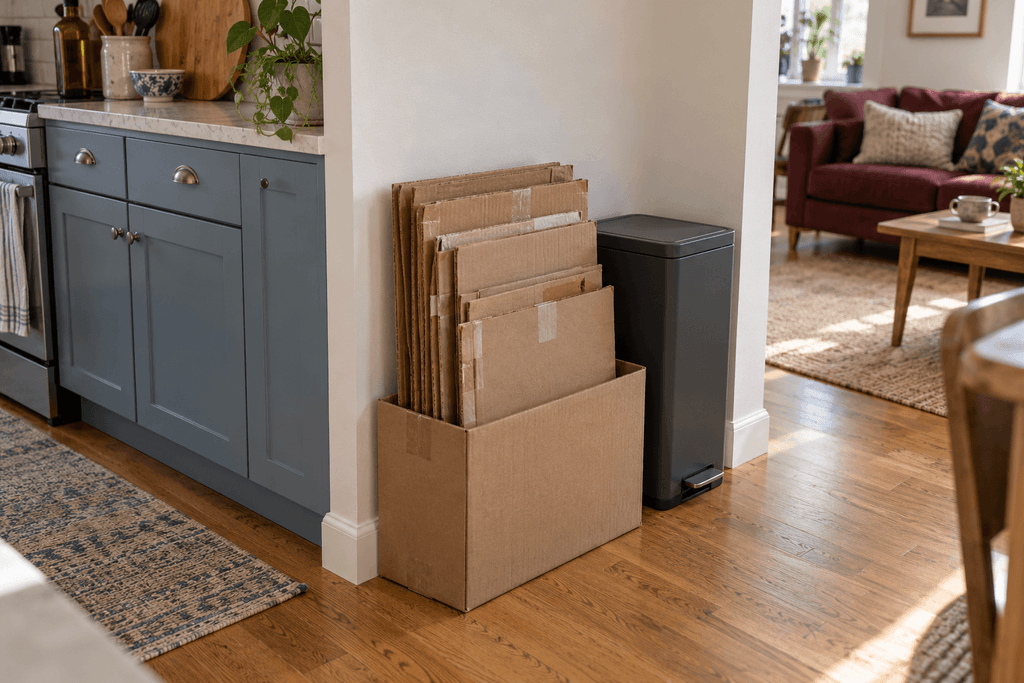
One intact, open-topped shipping box can hold several smaller flattened cartons upright.
Choose a box with a sound bottom and enough width to accept your usual packaging without forcing it in. Place the larger flattened pieces toward the back and smaller pieces in front, where you can see and retrieve them.
This works well when deliveries are occasional and the recycling point is nearby.
Its limitation is carrying: an ordinary shipping box may need two hands, especially when filled with awkward pieces. If you need a hand free for a stair rail or several doors, test the empty container on that route before committing to it.
Replace the outer box if its base weakens, it gets wet, or the sides begin spreading. A damaged container is no longer containing the stack reliably.
A Reusable Carrier for Trips Downstairs
A wide, sturdy reusable carrier can combine the holding spot and the trip to the recycling bin.
Check the opening against a flattened box, not just the bag’s advertised capacity. A tall shopping bag may hold plenty of bottles but still be too narrow for your usual delivery cartons.
The carrier should accept the cardboard without being stretched open or becoming difficult to grip. Watch for staples, rough edges, and corners that could damage the material.
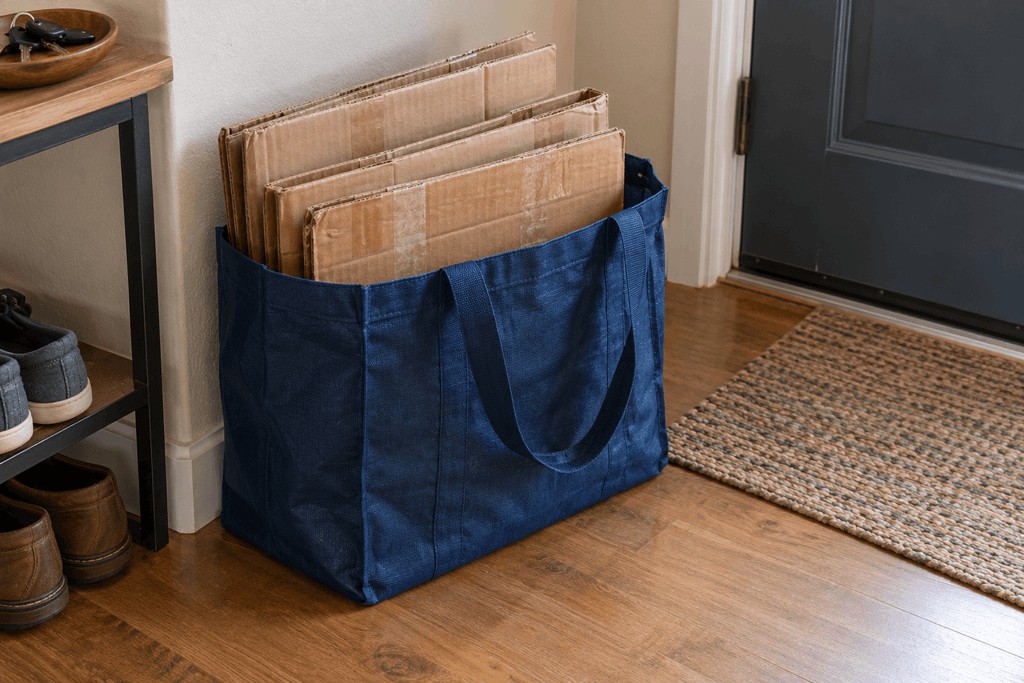
This option is useful when the filled carrier remains manageable through doors and on stairs. Oversized cartons may still need a separate trip.
At the collection point, empty it according to the recycling rules and bring it home. Do not assume the carrier itself belongs in the recycling.
An Upright Holder for a Regular Stack
A freestanding holder may be worthwhile if cardboard repeatedly slips out of your existing setup.
Look for a stable base, supports that contain the lower edges, and an opening wide enough for the cardboard you actually receive. If you intend to carry the holder, confirm that it is designed for transport; some racks are only meant to keep materials upright.
A narrow holder can save floor space, but it cannot make a wide carton disappear. Check the total footprint with cardboard inside, including anything projecting above or beyond the frame.
Buy one only if it fixes a specific failure in your current system. A holder that is awkward to empty or too small for normal deliveries simply adds another object beside the pile.
Where to Keep Cardboard in a Small Apartment
The most useful location is somewhere you can add a flattened box and remove the collection without rearranging the room.
That may be near where you unpack deliveries, but it does not have to be beside the front door. A slightly less visible spot can work well if it stays accessible.
Beside an Existing Recycling Station
Keeping cardboard near your other recycling makes the removal routine easier to remember.
Use a separate holder if bottles or containers might drip onto it. Check that the cardboard does not prevent you from opening the trash lid, using a pedal, removing a bag, or cleaning the floor.
A gap beside the bin is useful only if the stack stays contained within it. Loose cartons wedged between the trash can and a cabinet can slide out whenever you move either one.
In an Accessible Closet Corner
A dry closet corner can work when the container fits without blocking shoes, a vacuum, or frequently used belongings.
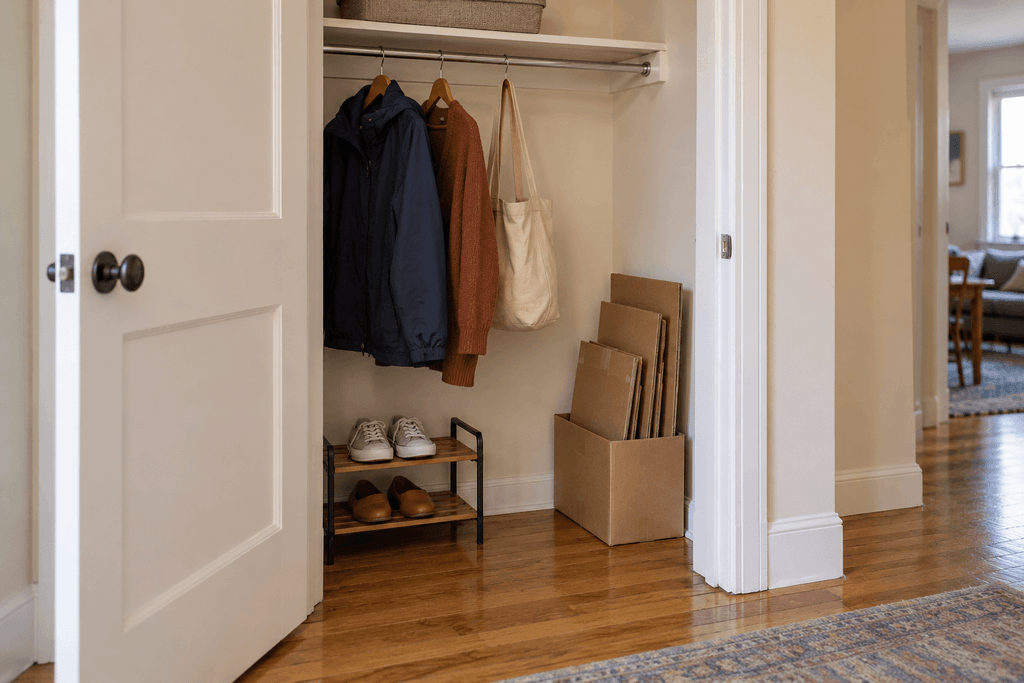
Test the closet with the cardboard in place. Can you open the door fully? Can you lift the container out without catching it on a shelf or coat? Can another person recognize where the recycling belongs?
Avoid pushing the stack behind everyday storage. If taking out recycling requires unloading the closet first, it is likely to stay there longer.
In a Dry Utility Area
A utility area may provide a practical holding spot, provided the container does not obstruct appliance access, ventilation, controls, or service equipment.
Keep the stack within its own footprint. Flattened boxes that gradually spread across the floor can make a workable location inconvenient.
What About Behind a Door or Beside the Refrigerator?
These spaces can look available while still being unsuitable.
Behind a door, test the full opening movement with the container filled. A door that opens most of the way may still catch the cardboard or prevent you from reaching something.
Beside a refrigerator, follow the appliance’s installation and ventilation requirements. Do not fill required clearance space with packaging.
Keep cardboard inside your apartment or in an approved building collection area, rather than creating a holding pile in a shared corridor.
If a bedroom is your only realistic option, use one accessible container rather than scattering boxes behind furniture.
Stop Flattened Boxes From Sliding and Falling Over
A flattened carton can still spring partly open, and several different sizes rarely form a tidy, stable stack on their own.
Contain the bottom edges first. A box, carrier, or suitable holder gives those edges a defined boundary. Leaning cardboard against a wall provides support in only one direction.
Then arrange the contents so you can remove them without pulling everything apart:
- Place larger pieces toward the back.
- Keep smaller cartons together near the front.
- Fold projecting flaps inward where practical.
- Remove pieces that make the container unstable or difficult to lift.
Do not keep forcing new cardboard into a full holder. If adding one carton makes three others slide out, the system has reached its useful capacity.
Avoid Turning a Narrow Gap Into a Deep Stack
A gap may hold cardboard neatly at first, then become difficult to use as more pieces accumulate.
If you must pull out the entire stack to add a small carton, or reach behind furniture to retrieve fallen pieces, the gap is functioning poorly.
Try a removable container that fits the space. If no suitable container fits and the cardboard keeps escaping, choose a different location rather than repeatedly rebuilding the same pile.
Make the Trip to Recycling Part of the Setup
A storage system can look organized indoors and still fail at the apartment door.
Before settling on it, try the route with a modest amount of cardboard. Check whether you can lift it comfortably, see where you are walking, and manage the doors along the way.
For stairs, a smaller load that leaves a hand available for the rail is more practical than an oversized bundle carried against your chest.

The largest load you can fit is not necessarily the load you can comfortably take out.
If you use a stationary holder, decide how the cardboard will leave it. Will you transfer it into a carrier, bundle it as required, or take a few manageable pieces directly to the collection point? Keep the necessary carrier accessible so every recycling trip does not begin with searching for a bag.
Match Your Storage to Local Collection Rules
Your indoor container is a temporary holding method. It does not determine how cardboard should be presented for collection.
Check whether cardboard belongs in a shared bin, a separate collection area, or a prepared bundle. Also check what to do with oversized pieces and what the building expects when the designated container is full.
Do not assume that leaving extra cardboard beside a shared bin is permitted.
Handle Oversized Delivery Boxes Separately
An occasional furniture or appliance box should not dictate the size of your everyday recycling storage.
Once you know you no longer need the packaging, check the building’s instructions for large cardboard. It may need folding, cutting to an accepted size, or taking to a designated collection point.
If cutting is necessary, use a suitable tool on a stable surface, protect the surface beneath it, and keep your hands clear of the cutting path.
Avoid forcing a large flattened carton into a small carrier just to keep everything together. It can make the load harder to grip and obscure your view while walking.
Plan the removal of a large delivery’s packaging separately. A compact system for ordinary parcels can still be the right choice even when it cannot hold a bed-frame box.
Set a Limit That Prevents Another Pile
Choose a removal trigger that is easy to recognize.
That might be when the carrier reaches a comfortable carrying capacity, when the holder fills without compression, or on a regular trip past the building’s recycling area.
Use the container’s usable capacity as the limit not the amount you can balance around it. Once boxes start accumulating beside or behind the holder, you have created a second pile.
If the setup overflows repeatedly, identify the actual cause:
- The container is too narrow: ordinary flattened boxes do not fit.
- The removal interval is too long: the container works, but fills before you empty it.
- The location is inconvenient: boxes land elsewhere because putting them away requires extra steps.
- Returns are mixed in: packaging that must stay is occupying the recycling space.
- Large deliveries are distorting the system: occasional oversized cartons need a separate plan.
Change the failing part before buying more storage. Two containers will not solve a routine that leaves both full.
Start With One Container and Test It
For your next few deliveries, try one sturdy box or suitable reusable carrier in an accessible, dry location.
Flatten each recycling-bound carton as you unpack it. Keep pending returns separate. Take the collection out before it becomes awkward to lift, then notice what caused difficulty: the fit, the location, or the journey downstairs.
That gives you a concrete reason to adjust the setup or buy a dedicated holder if necessary.
Good cardboard recycling storage gives packaging a temporary place to wait and a straightforward way out. It should stop the loose pile without turning part of your apartment into permanent box storage.