Where to Put Worn-but-Not-Dirty Clothes When Your Bedroom Has No Spare Space
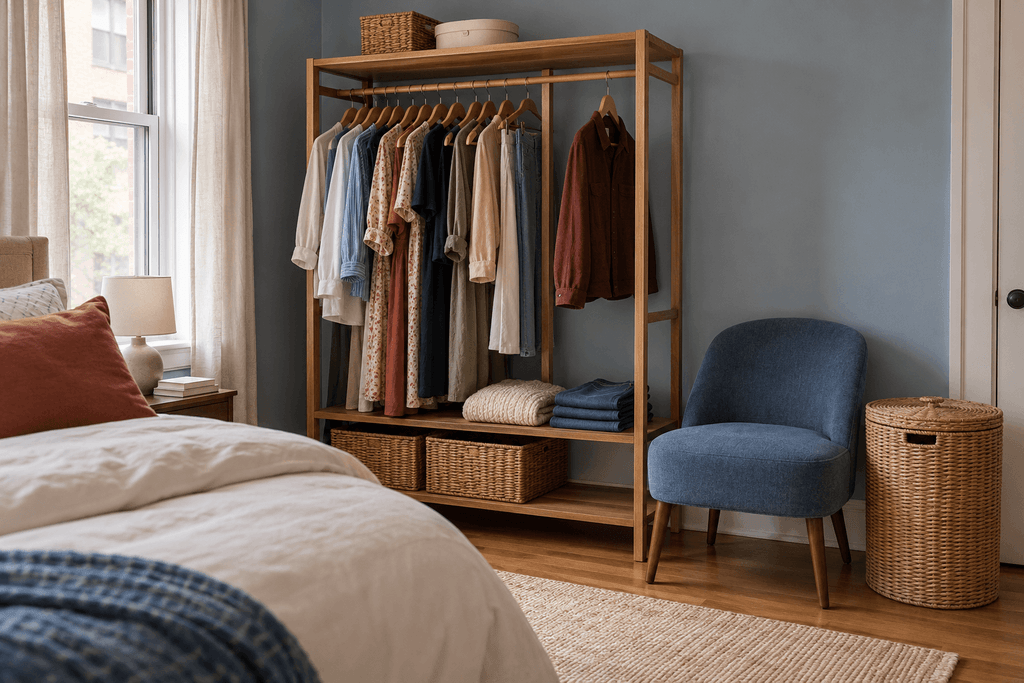
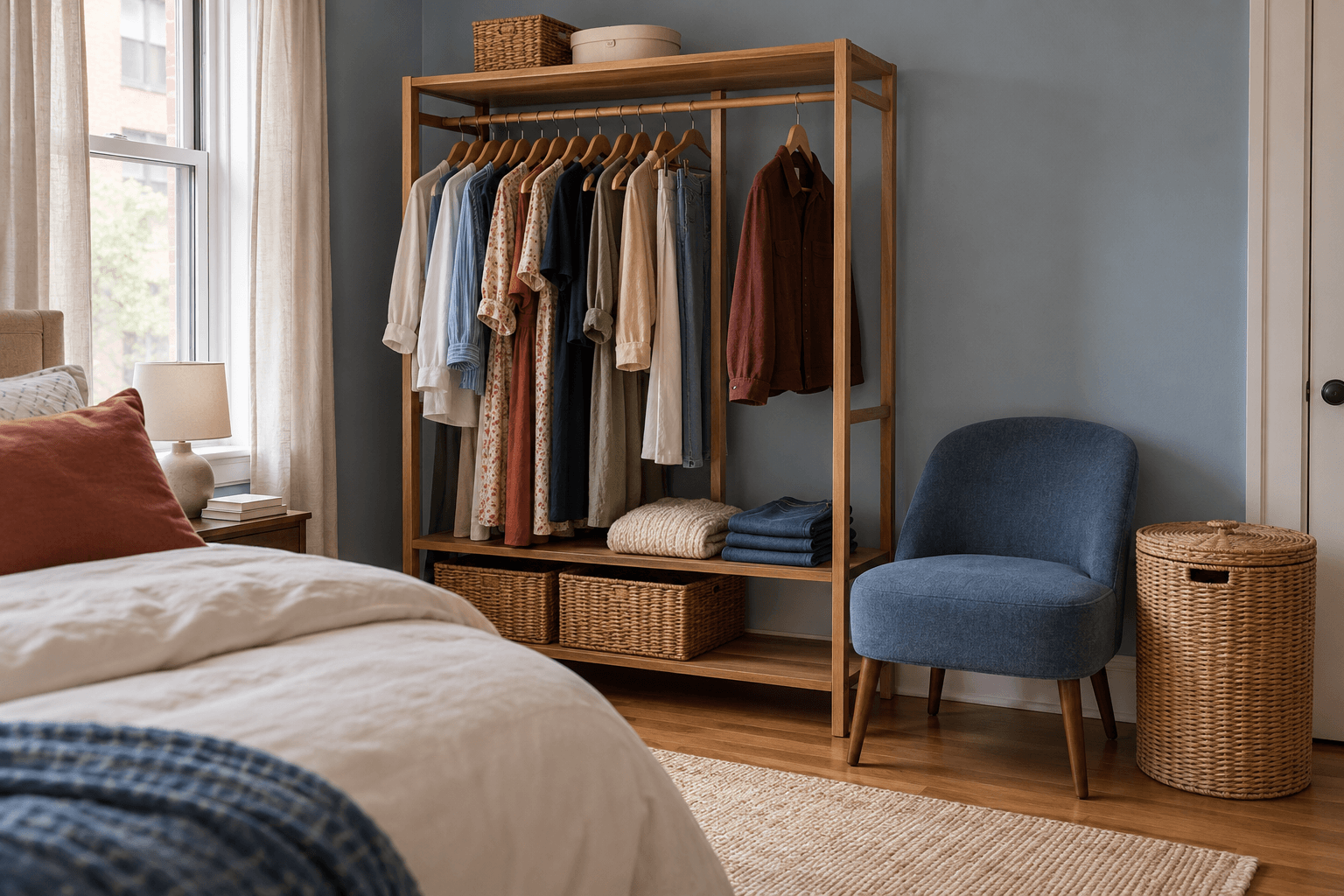
Clothes I planned to wear again often ended up on my bedroom chair. Smaller pieces sometimes went on top of my laundry hamper, which has a lid. I kept the lid closed so those clothes stayed separate from the dirty laundry inside.
That sounds workable until I needed to add something to the hamper. Then I’d have to remove the clothes, open the lid, put the dirty laundry in, close it, and put the clothes back on top.
The hamper lid made one problem very clear: a storage spot can keep clothes separate while making another everyday task harder.
More importantly, I eventually realized tossing clothes onto a chair or a hamper instantly ruined the visual calm of my room. No matter how clean or well-organized everything else was, stray garments sitting out in the open like that created immediate visual clutter that made the entire space look messy. So I decided to create a dedicated space, a rail and hooks my wall-mounted garment rack specifically for my worn clothes that I planned to wear again.
If you’re wondering where to put worn-but-not-dirty clothes, start with a small, separate place that suits the garments and leaves your chair, hamper, doors, and drawers usable. An existing shelf or part of a clothing rail may work before you buy anything.
When the Bedroom Chair Holds Most of Your Clothes
The chair held most of my wear-again clothes. I used to throw them there rather than fold them. So for me any alternative needed to account for that habit rather than assume I’d suddenly fold everything neatly when I take it off.
If your chair works the same way, choose storage based on how you actually handle those garments:
- For sturdy clothes you usually drape: An accessible hanging spot may work, using a suitable hook or hanger for the garment.
- For dry, soft casual clothes you tend to toss: A small open basket can provide a separate drop spot without requiring a precise fold. Keep the contents easy to see and retrieve so it doesn’t become another buried pile.
- For knitwear and structured pieces: Keep a supported folded section or suitable hangers nearby. These garments still need appropriate support, even if other clothes go into a basket.
The replacement needs to be convenient enough to use when you’re getting undressed. Start near where the clothes currently land, using existing storage where possible. The aim is to get the chair back without creating a routine you’re unlikely to follow.
Start With the Clothes You Actually Plan to Wear Again
A pair of jeans, a structured work jacket, and a soft wool sweater shouldn’t automatically go on the same kind of hook.
Before choosing a location, look at the pieces that usually land on your chair. Are they mostly clothes you fold, garments you hang, or a mixture? Are you planning to wear them again soon, or putting off a decision about washing them?
This guide is about short-term storage after you’ve decided an item is suitable to wear again. It doesn’t set a universal number of wears before washing. Follow the garment’s care instructions and consider how it was worn; clothes needing cleaning belong in your laundry or garment-care routine.
Don’t pack damp clothing into a folded stack or closed container. Give it the appropriate drying or care it needs first. Airing a garment isn’t the same as washing it.
Match the Storage to the Garment
Use this as a starting point, then check the care label and the construction of your own clothes.
| Clothing you’re keeping for another wear | A practical storage option | What to check |
|---|---|---|
| Structured jacket or woven shirt normally stored hanging | Suitable hanger on an existing rail or compatible hanging point | Shoulders remain supported; sleeves don’t catch in a door or drawer |
| Dry jeans or sturdy casual pants | Folded shelf space, trouser hanger, or a suitable hook using a sturdy hanging loop | The garment is secure and doesn’t trail on the floor |
| Wool knit sweater or cardigan | Gently folded on a shelf or in a shallow compartment | Avoid concentrating its weight on a small hook |
| Dry T-shirt or soft lounge pants | Small folded section on a shelf or in a shallow basket | You can see and retrieve each piece without emptying a pile |
| Pajamas you plan to wear again | One defined folded spot, or a suitable hook for garments designed to hang | Keep the set together and separate from dirty laundry |
For wool specifically, Woolmark’s garment-care guidance distinguishes between woven garments, which can use shaped or padded hangers, and knitted garments, which should be gently folded. A hook isn’t a universal substitute for a hanger or shelf.
If you need both hanging and folded storage, use two small sections close together. You don’t need a separate organizer for every clothing type.
Try Existing Clothing Storage First
The lowest-footprint option may be a clearly marked part of the storage you already have.
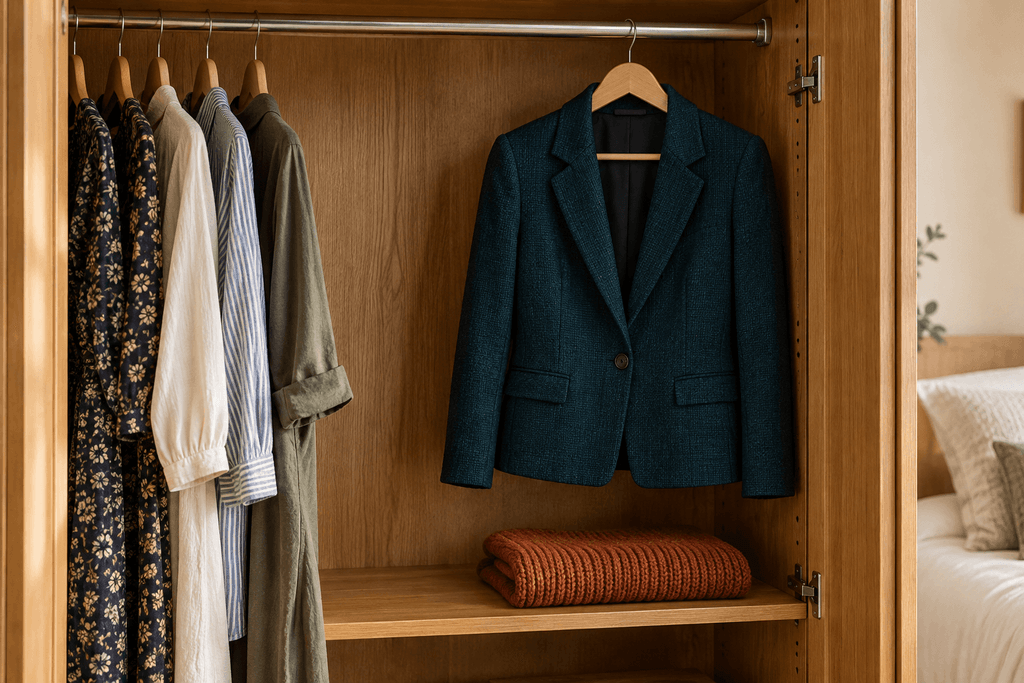
A Separate Section of the Closet Rail
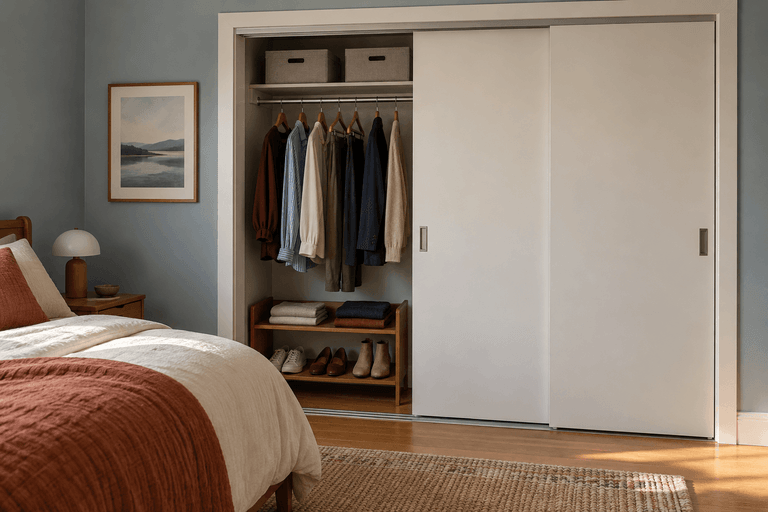
Reserve a short section at one end for garments you plan to wear again. A divider or a distinct group of hangers can make the boundary recognizable without requiring a second clothing rack.
This works when the rail has enough room to remove an item without pushing through the rest of your wardrobe. If every hanger is already squeezed together, adding another category won’t create space.
You also don’t have to put worn items back beside freshly washed clothing if you prefer to keep them separate. Choose a different location rather than forcing a system you won’t want to use.
A Small Shelf or Drawer Section
A reachable shelf is useful for dry clothes that need folded support. A shallow drawer section can also work if you prefer concealed storage and can remember what you’ve put there.
Keep the section distinct from clean-laundry overflow. If it becomes the place for everything you haven’t put away, it stops telling you which pieces are ready for another wear.
For broader folded-clothing options, see how to store clothes in a small bedroom without a dresser.
Use a Door or Wall Only if It Still Works When Loaded
An empty hook takes very little space. A hook holding a jacket can project much farther into the room.
For worn clothes storage in a small bedroom, check the actual garments as well as the organizer. Sleeves, hems, hanger ends, and bulky layers can interfere with a door even when the hook itself fits.
Before buying an over-the-door rack, check the specific product’s door-thickness range, top-clearance requirements, and load limit. The door should close and latch normally with the organizer installed. Don’t force it shut.
For wall-mounted storage, follow the exact hardware and surface requirements. An adhesive hook isn’t automatically suitable for every painted wall, and a screw-mounted rack needs appropriate fixing. Check your rental rules before installing anything.
Once loaded, the arrangement should let you:
- Open the bedroom and closet doors normally.
- Use nearby drawers without catching clothing.
- Walk past without brushing against the garments.
- Remove one item without pulling several others down.
If the back of the door fails these checks, look at an existing rail or shelf before adding another freestanding piece.
Keep a Basket Shallow and the Hamper Lid Clear
A small basket can suit dry, foldable clothing. It becomes less useful when you have to dig through several layers to find the piece you want.
Try a basket you already own in the proposed location. It should have its own supported place on a shelf or another suitable surface, rather than sitting on something you need to open.
That is the problem with my hamper lid. It keeps the worn clothes outside the dirty laundry, but every trip to the hamper requires moving them twice: off the lid and back onto it.
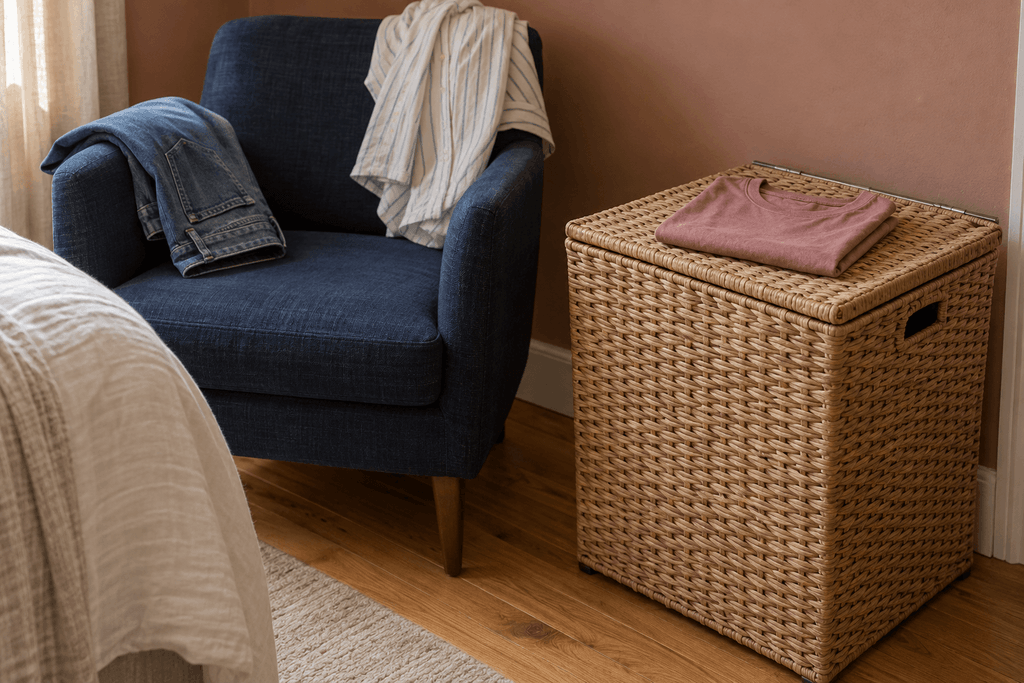
The same issue can happen with clothes on a storage-ottoman lid, across a drawer opening, or over the back of the desk chair you use every day. The spot looks available because nothing is there at that moment. It isn’t necessarily available during the next task.
A useful storage spot leaves the thing beneath or beside it usable. If removing the clothes becomes a prerequisite for opening, sitting, or walking, test another location.
Three Small-Bedroom Examples
These are illustrative room situations, not rooms I’ve personally tested. Use them to compare the tradeoffs in your own bedroom.
Example 1: The Closet Is Full, but One Shelf Has Room
Suppose your repeat-wear items are jeans, lounge pants, and a wool knit sweater. The closet rail is packed, but a reachable shelf has a clear section.
Start with folded storage there. Put the sweater where its weight is supported, and keep the other pieces visible enough to select individually. A divider or a small basket can mark the section if needed.
The check is retrieval: can you take the jeans without lifting the sweater and moving another stack? If not, spread the items out, change the folding arrangement, or reduce what occupies that section.
Adding hooks would create hanging capacity, but it wouldn’t necessarily suit these particular garments better.
Example 2: The Bedroom Door Opens Against the Wall
Suppose you want to hang a woven overshirt and a work jacket, but the open door already rests close to the wall behind it.
An over-door rack may prevent the door opening fully once the garments are added. Hanging them there could also squeeze or rub the clothing between the door and wall.
Try suitable hangers in a separated part of the existing rail instead. If there’s no room, consider another permitted mounting location that doesn’t interfere with furniture or circulation. Don’t assume the door is the best choice simply because the rack uses no floor space.
Example 3: Two People Share One Small Bedroom
Suppose one person keeps a repeat-wear jacket and the other has folded pajamas and lounge pants. One shared basket would put hanging and folded needs together and make ownership less obvious.
Try a defined hanger space for the jacket and a separate shallow folded section for the other person. Use a divider or recognizable containers if necessary; you don’t need two matching racks.
Check the layout at the busiest point of your usual routine. Both people should be able to reach their clothes and use the hamper without moving the other person’s belongings.
Use This Worksheet Before Buying an Organizer
The Tiny Space Edit Rewear-Storage Check is an editorial planning worksheet, not a tested scoring system. It helps you compare locations using your clothes and your room.
Copy it into your notes or print this section. Complete it for each possible location.
| Check | Your answer |
|---|---|
| What garments usually need a temporary home? | __________ |
| Which need hanging support, and which need folded support? | __________ |
| What existing location could hold them? | __________ |
| What task currently uses that location: opening, sitting, dressing, or walking? | __________ |
| With the actual clothes in place, what becomes harder to use? | __________ |
| Can you see and remove each item without relocating unrelated belongings? | __________ |
| What marks the boundary between these clothes and clean or dirty clothing? | __________ |
| When will you review the items: while choosing an outfit, on laundry day, or another routine? | __________ |
If the location blocks a task, choose somewhere else or change the arrangement. If the layout works but the items are hard to identify, improve their separation before buying more capacity.
Measure the Loaded Space, Not Just the Organizer
For hanging storage, check the width, depth, and drop of the clothes as they’ll actually hang. For folded storage, check your real folded pieces and whether you can lift them out.
Here’s a hypothetical example: a shelf section is 18 inches wide, but your jeans and sweater each take up 10 inches when folded. Side by side, they need 20 inches, so that arrangement won’t fit. Stacking them may fit the width, but could require lifting the top item whenever you want the bottom one.
You could try a different fold, use a second existing shelf section, or keep only the item you expect to wear next in that spot. The arithmetic is simple; the choice depends on how much handling you’re willing to do.
Try the Location Through Your Normal Routine
Use your existing shelf, basket, or compatible hanging space before shopping. Don’t improvise an unsafe mount to test a hook.
Check what happens when you dress, add dirty laundry, open the closet, and move around the bed. The important question is whether the proposed location gets used and leaves those tasks convenient.
If the clothes return to the chair, ask what was harder about the alternative. It might be too far away, require a fold you won’t do at that point, or be unsuitable for the garment. Change that part of the setup before adding another organizer.
Give the Clothes a Reason to Leave
Choose a regular moment to reconsider what’s in the temporary spot. Outfit selection can be a useful prompt because you’re already deciding what to wear. Laundry day offers another opportunity to check what needs cleaning.
At that point, decide whether each item will be worn again, returned to ordinary storage if appropriate, or sent for cleaning. Don’t automatically wash it just because it has occupied the spot for an arbitrary number of hours.
The useful capacity is enough for your normal rotation without hiding pieces underneath an indefinite pile. There isn’t one correct hook count or basket size for every household.
If the rest of your room also has inconvenient return locations, how to organize a small bedroom covers the wider storage routine. For the visual side of the problem, how to hide clutter in a small bedroom offers ways to contain what’s already out.
For this particular problem, start with the chair and the hamper: can you sit down and add dirty laundry without moving the clothes you plan to wear again? A separate storage spot should make those ordinary tasks easier, while giving the garments the support they need.