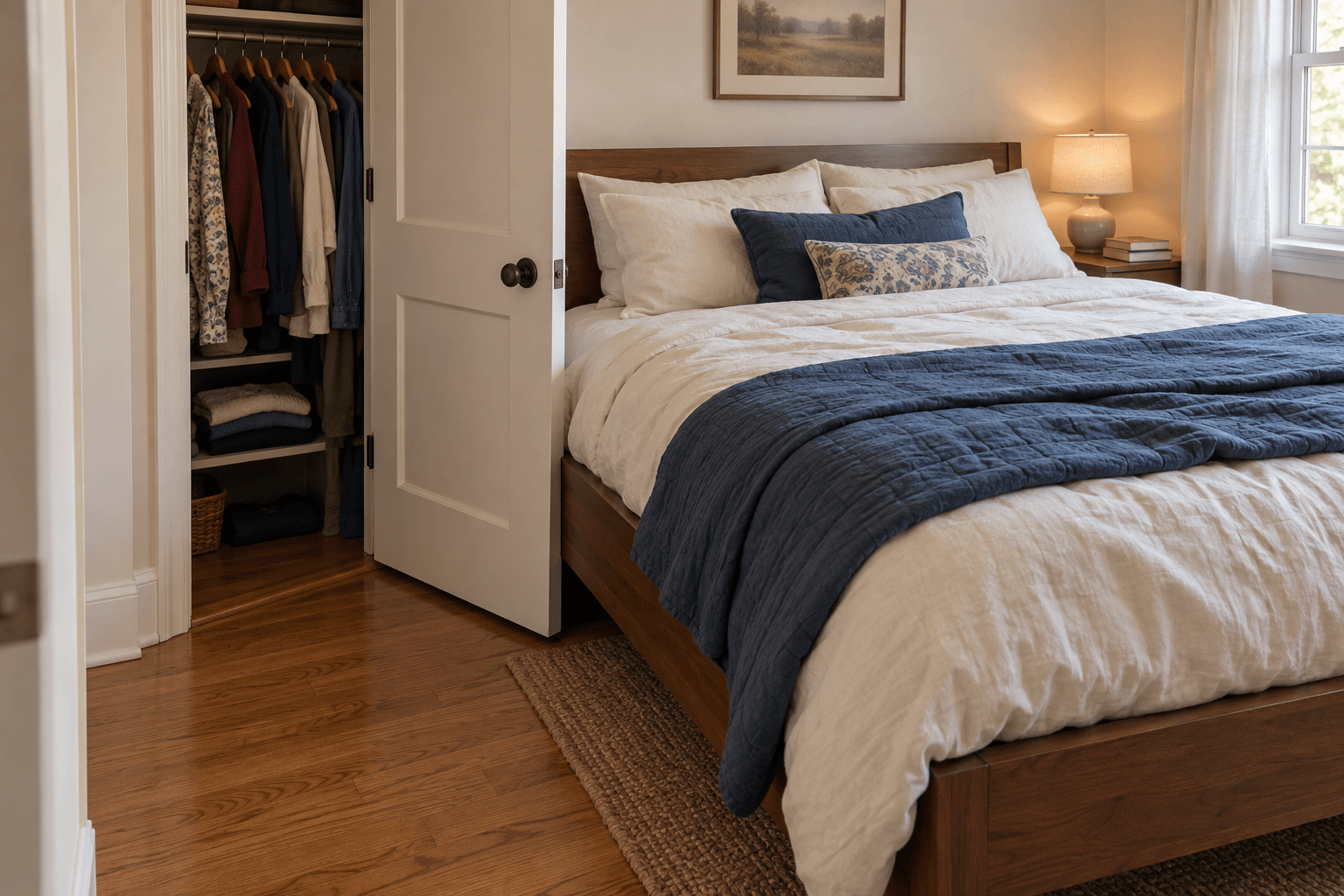
Small Bedroom Door Clearance: When the Door Hits the Bed or the Bed Blocks the Closet

A bedroom door catches the bed frame. The closet door opens, but only far enough to reach through a narrow gap. Or two doors meet in the same corner, so using one means closing the other.
These are different problems. Small bedroom door clearance is about more than making the furniture fit. tTe room also needs to work when doors, drawers and storage are in use.
Start by identifying what is obstructed. Then compare the smallest changes that could improve it without sacrificing access somewhere else. Sometimes moving a nightstand solves the problem. Sometimes keeping the bed you want means accepting less convenient closet access.
First, Identify What Is Actually Blocked
Check the bedroom entrance and the closet separately.
- A collision: The moving door or its handle contacts the bed, dresser, chair or another door.
- A restricted opening: The door stops short, leaving less room to pass through or reach storage.
- An access problem: The door opens, but furniture makes it difficult to see, stand, bend or remove belongings.
- A competing-door problem: The bedroom and closet doors occupy some of the same space when open.
Do not assume these all need new doors or smaller furniture. A chair that sits in the door’s path needs a different response from a bed that restricts a built-in closet.
Open each door slowly, without forcing it against an obstruction. Note the first contact point and the space used by the handle as well as the door itself. For a folding closet door, check how the panels project into the room when folded.
Then try the actual task: entering the room, choosing a shirt, removing a laundry basket or reaching shoes.
A closet door that opens partly may still give usable access. A bedroom entrance needs to remain usable for entering and leaving the room. Do not treat those compromises as interchangeable.
When the Bedroom Door Hits the Bed or Nearby Furniture
If the bedroom door hits the bed, identify what it hits before rearranging the entire room.
The projecting corner of the frame, a wide headboard, a nightstand or a chair can be the obstruction. Measure the bed frame’s outside dimensions rather than relying on the mattress size.
Move the Smallest Obstruction First
If the door catches a nightstand, test moving that piece before moving the bed. If it catches the desk chair, check whether the chair can tuck beneath the desk in its normal stored position.
Check the occupied room too. A chair may clear the door when tucked away but block the route while someone is using it.
Moving a bedside table may improve door clearance while making a lamp cord stretch across a walking route. Include cords and access to switches in the check.
Test a Small Bed Shift Before Rotating It
A small shift may move the frame corner out of the door’s path. Mark the proposed position on a paper plan or with floor-safe tape before lifting heavy furniture.
Check what the shift changes:
- Can you still reach the side of the bed you use?
- Does the closet retain usable access?
- Can nearby drawers and under-bed storage open?
- Are windows, heaters and other fixed features still accessible?
- Can you operate the bedroom door without contacting the furniture?
For rooms where several bed positions are possible, where to put a bed in a small rectangular bedroom helps compare the wider arrangement.
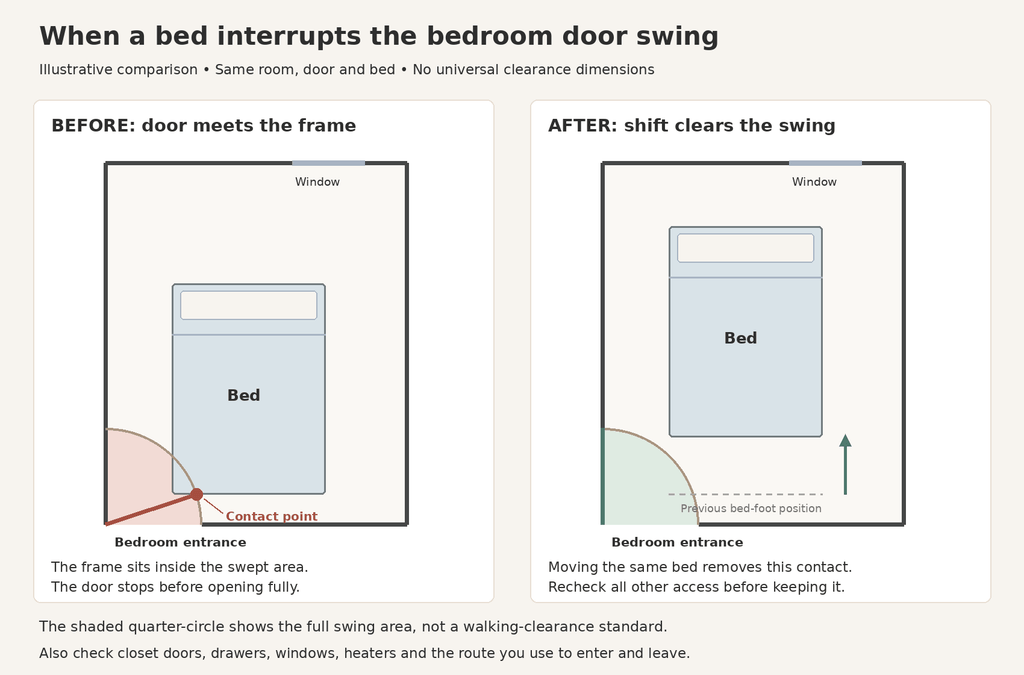
Rotate the Bed Only if the Whole Layout Improves
Rotating the bed may remove the collision while narrowing another passage or placing the frame in front of the closet.
Compare both arrangements with the doors open. Do not judge the new position only by how much empty floor it shows.
A protective bumper may reduce damage from contact, but it does not create clearance. If the entrance remains difficult to use, the underlying obstruction still needs attention.
When the Bed Prevents the Closet Door From Opening Fully
A bed blocking the closet door can create a problem that is easy to underestimate: you can still get things out, but using the storage takes more effort.
That happened in one of my rented apartments.
My big bed prevented the closet door from opening fully. I could still get things in and out, so the situation was manageable. I was not willing to give up the bed, especially because I expected to move eventually.
But keeping it meant compromising on more than the door opening.
The closet was harder to see into because it was dark and the opening was restricted. I preferred hanging most of my clothes because they were easier to see and move around than folded items. Searching for something deeper inside could disturb stacks or knock clothes over especially when I needed something I had put farther back.
Additionally, I barely used the bottom shoe rack. Bending down and trying to locate shoes through the awkward opening felt like too much of a hassle, so they mostly ended up under the bed or in a corner. Also, some clothes ended up being worn straight from the bedroom chair because I didn’t see the point of putting them in the closet just to squeeze through and take them out in a day or two again.
The closet still held belongings, but parts of it had stopped being convenient everyday storage.
That is what you need to check in your room. Can you comfortably select and return things, or are you only technically able to reach them?
If You Are Keeping the Bed, Organize Around the Usable Opening
Replacing a bed is not automatically the right answer, particularly in a temporary home. But keeping it works better when you acknowledge which storage areas are inconvenient.
Put Everyday Clothes Where You Can See and Remove Them
Start with the opening you actually have. Give frequent-use clothing the rail or shelf sections you can reach without pushing through unrelated belongings.
Hanging worked better for me in that particular closet. It is not the right storage method for every garment. Keep clothing that needs folded support on suitable shelves or in accessible compartments rather than hanging everything to solve the visibility problem.
Leave enough space on the rail to move hangers and remove a garment. Packing more clothes into the accessible section can recreate the same difficulty.
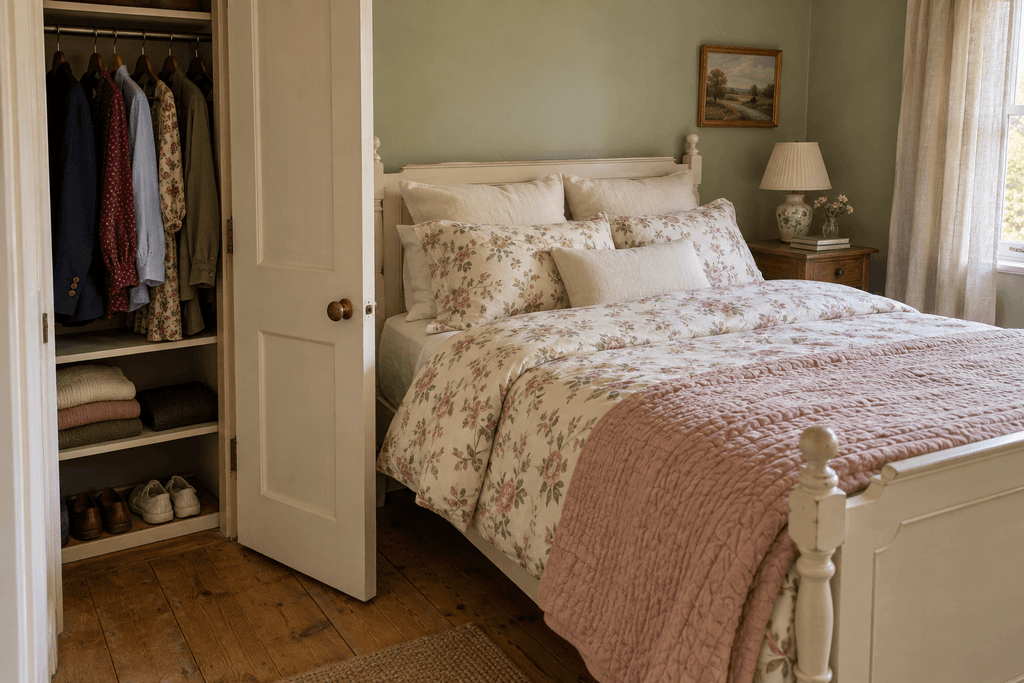
Reduce Searching Through Deep Folded Stacks
If taking one item disturbs several others, try smaller groups or shallower storage in the reachable area.
A container is useful only if you can see its contents or remove it through the restricted opening. Check its full retrieval path before buying; a bin that fits on the shelf may not fit through the available gap.
Use less convenient areas for occasional belongings only when you can still retrieve them reasonably. Labeling a container does not solve an opening that is too small to remove it.
Improve Visibility Without Adding Another Obstruction
First check whether clothing, containers or the partly open door are blocking your view. Better lighting may help you identify belongings, but it cannot increase the space available for reaching or removing them.
If you add a closet light, choose one suitable for its location and follow its installation and clearance instructions. Avoid improvised lamps or cords that get trapped by the door or furniture.
Stop Forcing Daily Use of an Awkward Bottom Shelf
Test the actual movement: can you bend or crouch, see the item and lift it out without bracing against the bed or emptying the shelf?
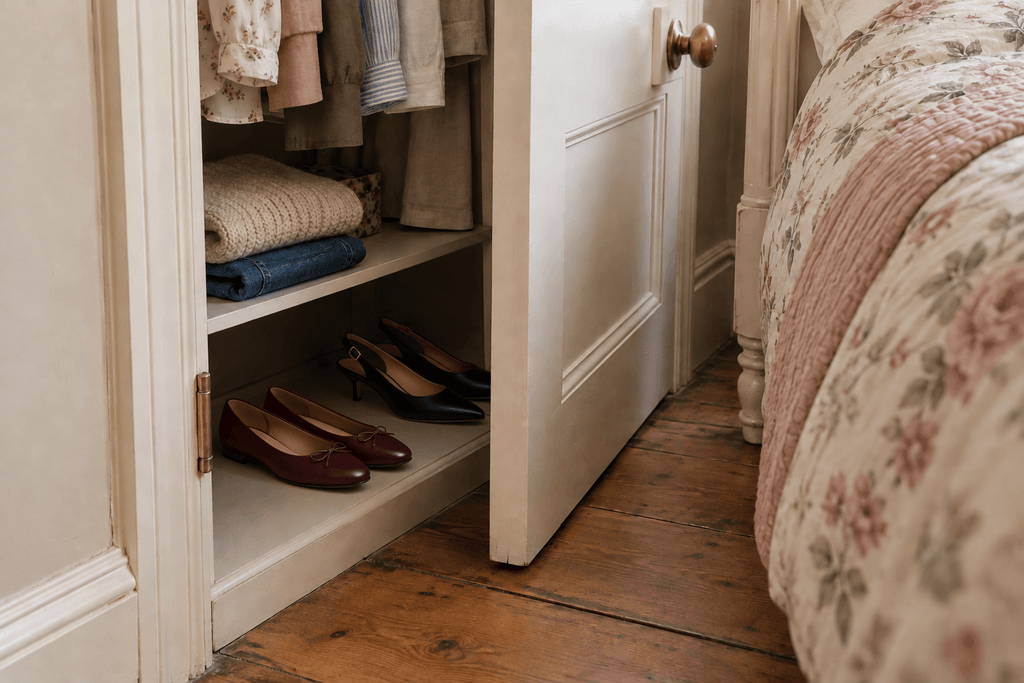
If not, move daily shoes somewhere more accessible. The shelf does not have to hold shoes simply because that was its intended purpose.
For alternatives, see how to store shoes in a small bedroom. If you choose under-bed storage, check that it pulls out from the available side of the bed and does not occupy your walking route.
Deal With the Clothes That Move Onto the Chair
An inconvenient closet can push clothing into the rest of the bedroom. The chair becomes easier to use than the shelves, and eventually getting dressed means searching there instead.
Separate two issues:
- Clean clothes awaiting storage: Give them accessible ordinary storage and a workable return routine.
- Clothes you intend to wear again: Give them a defined temporary location, separate from laundry that needs cleaning.
Do not make one chair or basket responsible for both categories indefinitely. You lose track of what belongs where, and the chair stops functioning as seating.
Our guide to where to put worn-but-not-dirty clothes covers that temporary-storage problem. For the closet itself, the priority is reducing the effort of selecting and returning everyday clothing.
When the Bedroom and Closet Doors Interfere With Each Other
If both doors occupy the same corner when open, moving the bed may not resolve their conflict.
Check each door separately, then compare their movements together. Identify whether they contact one another or whether an open closet door obstructs the route through the bedroom.
For a minor inconvenience, closing the closet before opening the bedroom door may be manageable. That is a compromise, not a fix and it should not leave the bedroom entrance difficult to use.
If the doors repeatedly collide or obstruct necessary access, discuss the arrangement with the property owner or a qualified installer. Do not assume that reversing the swing is straightforward. It can change access to a switch, create a hallway obstruction or introduce a different collision.
Before Replacing a Door, Check the Trade-Off
A different door system can change the room’s access, but it is not a universal solution.
- Sliding closet doors: Remove the hinged swing into the bedroom, but bypass panels limit which section is exposed at one time.
- Bifold doors: Fold into a smaller projection than a full-width hinged panel, but still occupy space and affect the usable opening.
- Surface-mounted sliding doors: Need adjacent wall space for the panel and compatible hardware.
- Pocket doors: Need a suitable wall cavity and installation assessment; they are not simply a different door hung in the existing opening.
- Closet curtains: May suit some permitted arrangements, but gathered fabric still needs somewhere to sit.
For renters, confirm permission before changing doors or hardware. Have structural or electrical implications assessed by the appropriate professional.
If your closet already has overlapping sliding panels, how to organize a small closet with sliding doors addresses storage through that changing opening.
Run This Door-and-Storage Check Before Buying Anything
Use the same checks for your current layout and each proposed change:
- What contacts what? Identify the door, handle or furniture edge involved.
- Can you enter and leave normally? Check the entrance with furniture in its everyday position.
- What can you see inside the closet? Identify the sections hidden by the restricted opening.
- Can you remove and return an ordinary item? Try a hanger, folded garment, shoe pair and any container you use.
- What happens to the lower storage? Test bending and retrieving rather than assuming the shelf remains useful.
- Does the proposed fix obstruct something else? Check drawers, windows, lighting, heaters and walking routes.
- What belongings will need a different home? Account for displaced shoes and clothing before they become another floor pile.
There is no single gap measurement that proves every arrangement works. Door type, handle projection, furniture dimensions and your access needs all affect the result. Follow applicable access requirements and equipment instructions alongside the practical checks.
Keeping the bed can be a reasonable choice but make the cost of that choice visible. Figure out which tasks become harder, which storage stops being useful and where displaced belongings will go. A compromise is easier to live with when the rest of the room is arranged around it.