How To Light Under A Loft Bed Without Glare Or Dark Corners
Disclosure
This post may contain affiliate links. If you purchase through these links, I may earn a small commission at no extra cost to you. As an Amazon Associate I earn from qualifying purchases.
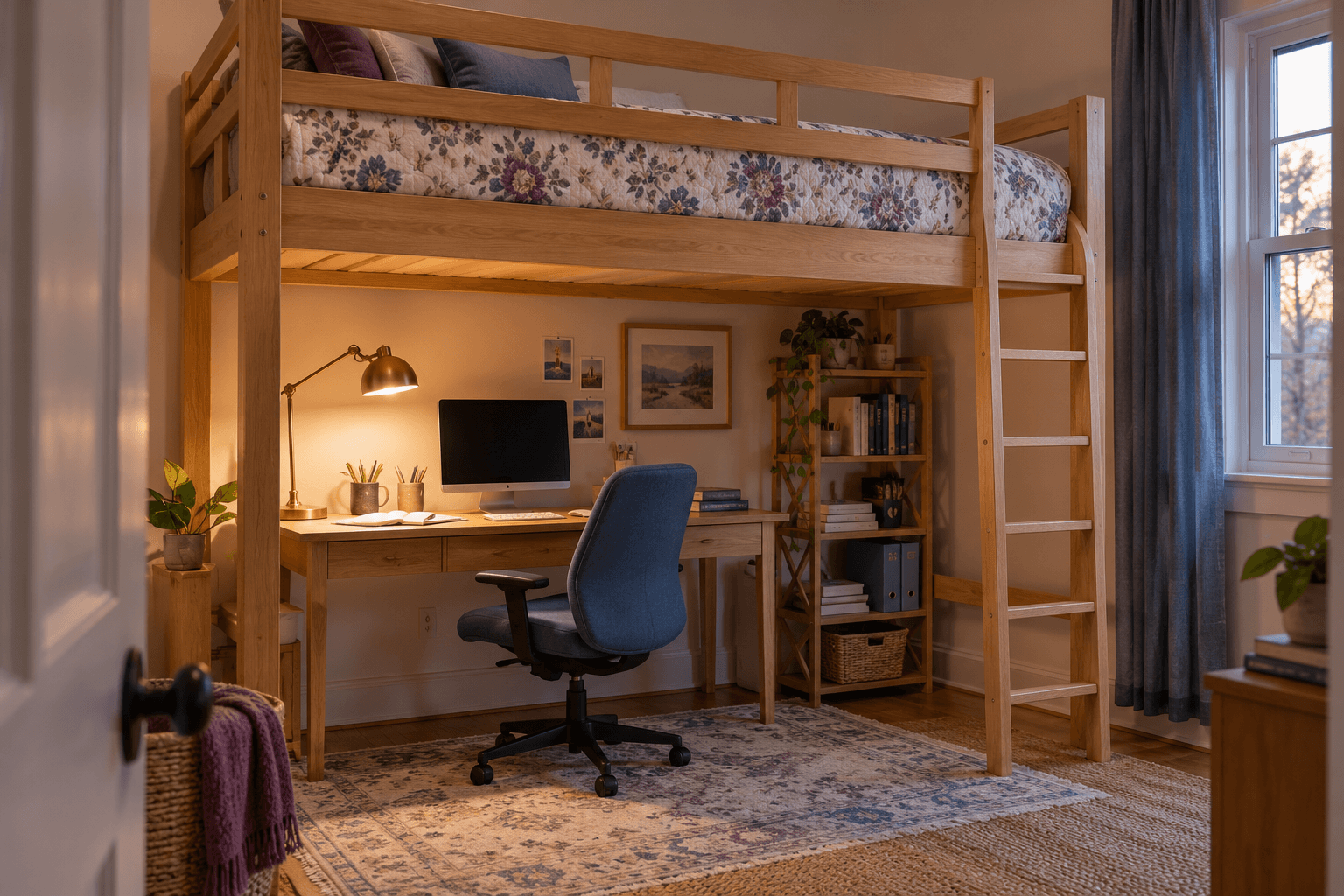
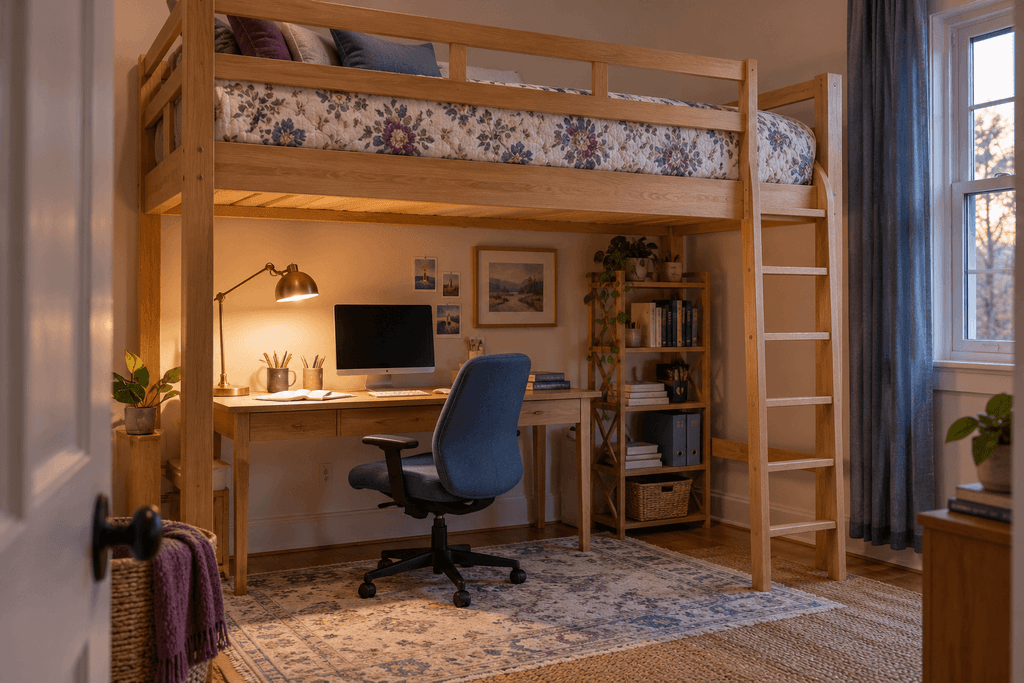
The space under a loft bed can fit a desk or reading chair beautifully and still feel too dark to use. The bedroom ceiling light brightens the room, but the bed platform gets between that light and the area below.
An LED strip around the frame may make the space look inviting without putting enough light on your notebook. Add a brighter strip in the same position, and you may end up looking directly at a row of glaring LEDs.
Good lighting under a loft bed starts with the task, the light’s position and a suitable way to support it. A desk needs light on the work surface. A reading seat needs light on the page. A lounge area benefits from softer illumination across the surrounding surfaces.
You do not necessarily need lights attached to the bed. A desk-supported lamp or appropriately installed wall light may solve the problem without changing the frame.
Start With What You Do Under The Bed
Before choosing a fixture, sit where you normally work or relax. Put your actual belongings in place: monitor, notebook, chair, shelves or cushions.
Then identify what is difficult to see.
If the notebook is dark but the screen is comfortable to view, start with task lighting. If the whole area feels gloomy, consider how to illuminate the surrounding wall as well. If the light is already bright but uncomfortable, its position or exposed source may be the problem.
These situations need different adjustments. Adding more brightness to all three can make the last one worse.
The same approach works under a full-size loft bed. Its wider platform may shade a larger area, but mattress size alone does not tell you how many lights you need. The desk position, platform height, wall finishes and light distribution matter too.
Check The Bed Instructions Before Mounting Anything
Find the instructions for your exact loft bed before choosing a clip-on light, adhesive strip or fixture mounted beneath the platform because some beds restrict attachments.
A light being lightweight, removable or sold with a clamp does not establish that it is suitable for your bed.
Do not drill into structural members, alter guardrails or remove parts to accommodate lighting unless the bed manufacturer expressly permits that change.
If bed-mounted lighting is not allowed, consider:
- A stable desk lamp with a shaded or shielded light source.
- A clamp lamp attached to a compatible, separate desk.
- A suitable wall-mounted light where installation is permitted.
- An existing room lamp positioned to brighten the wall beside the loft.
Check dorm rules as well as product instructions. A clamp that suits your own desk may not be permitted on university furniture.
Why The Ceiling Light Does Not Reach Enough Of The Space
A loft platform interrupts light from above. Frame rails, storage units and a desk hutch can create additional shadows underneath.
This is why changing the bedroom ceiling bulb may leave the desk disappointing: much of the extra light still reaches the top of the bed or the room outside it.
Start by turning on the room lighting you normally use. Check whether the under-loft area has a local shortage or whether the whole bedroom needs better illumination.
If the surrounding room is dark too, keep some general light on while you use the desk. A bright work surface surrounded by darkness can create an uncomfortable contrast.
OSHA’s workstation lighting guidance recommends well-distributed, diffuse light and supplemental task lighting for reading and writing, while avoiding glare on the screen.
For a room-wide problem, see how to brighten a dark room without overhead lighting. The under-loft setup should work with the rest of the room rather than becoming its only bright patch.
When LED Strips Provide Glow But Not Useful Task Light
A decorative strip can outline the bed beautifully while leaving the center of a desk dim.
The issue might be output, but it can also be direction. A strip aimed toward the floor at the outer edge of the frame is doing a different job from a light aimed at the desktop against the back wall.
Before replacing it, check:
Where does the light land? Look at your page and keyboard, not just the glowing frame.
Can you see the LEDs directly? A source close to your seated eye level may be distracting even when the work surface remains dark.
What does the published output describe? A total for an entire strip is different from output per foot or meter. Check the stated configuration before comparing products.
Is the setting intended for work? A dim decorative color effect may suit relaxing but not reading printed text.
ENERGY STAR explains that lumens describe light output; watts describe energy use. Use the published lumen information, where available, rather than strip length, LED count or a “bright” label alone. Kelvin describes color appearance, not output. A cooler-looking setting is not proof that more useful light reaches the desk.
There is no single lumen total that guarantees a good setup beneath every loft bed. The same output behaves differently when it is close to a page, hidden behind a rail or spread across the entire underside.
Choose A Light For The Desk Or Reading Position
For A Desk: Start With An Adjustable Task Light
An adjustable lamp lets you direct light onto paper without lighting the monitor from the same angle.
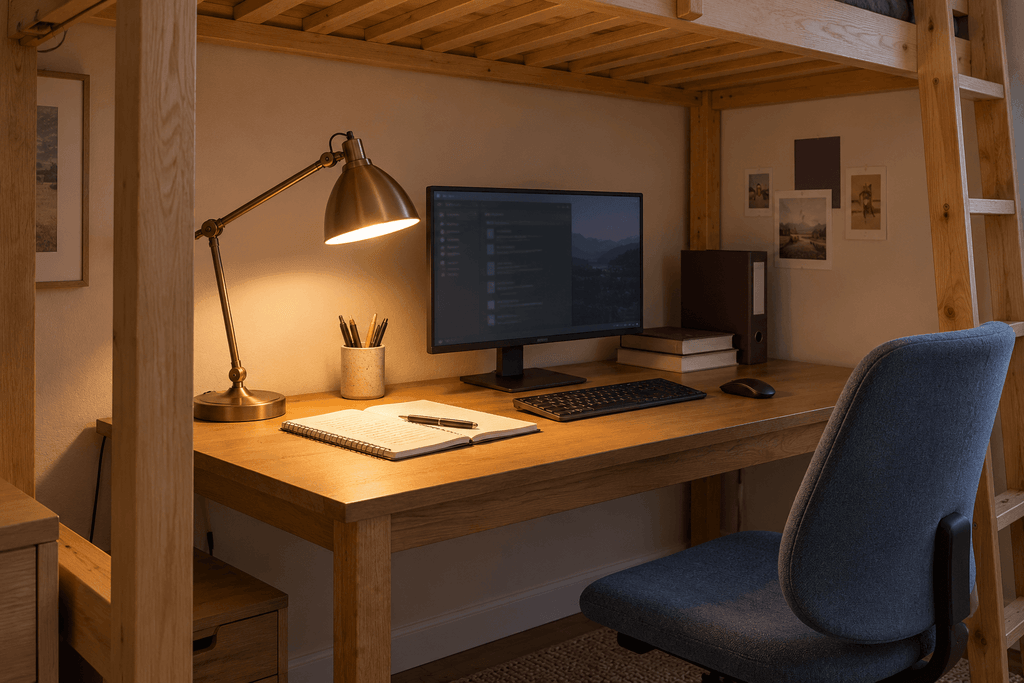
A compact base can work if the desk has enough space. If the surface is crowded, a desk-mounted clamp may be an option, provided the lamp’s clamp range and the desk’s material and construction are compatible.
Measure the lamp in its working position. Its arm and head need to clear the bed platform, shelves and your head when you sit down or stand up.
Position it so your writing hand does not cast a heavy shadow across the page. The side opposite your writing hand is a useful starting point, then adjust for the actual desk and screen.
If a notebook and keyboard both need light, check that the illuminated area covers both. A narrow spotlight may make you keep moving the lamp as you change tasks.
For A Reading Seat: Light The Page From Beside Or Behind Your Shoulder
A reading chair beneath a loft can work with a shaded lamp positioned beside the seat, or a suitable wall light.
Test the arrangement while holding a book at your normal angle. The page should be visible without placing the bulb or exposed LEDs directly in front of your eyes.
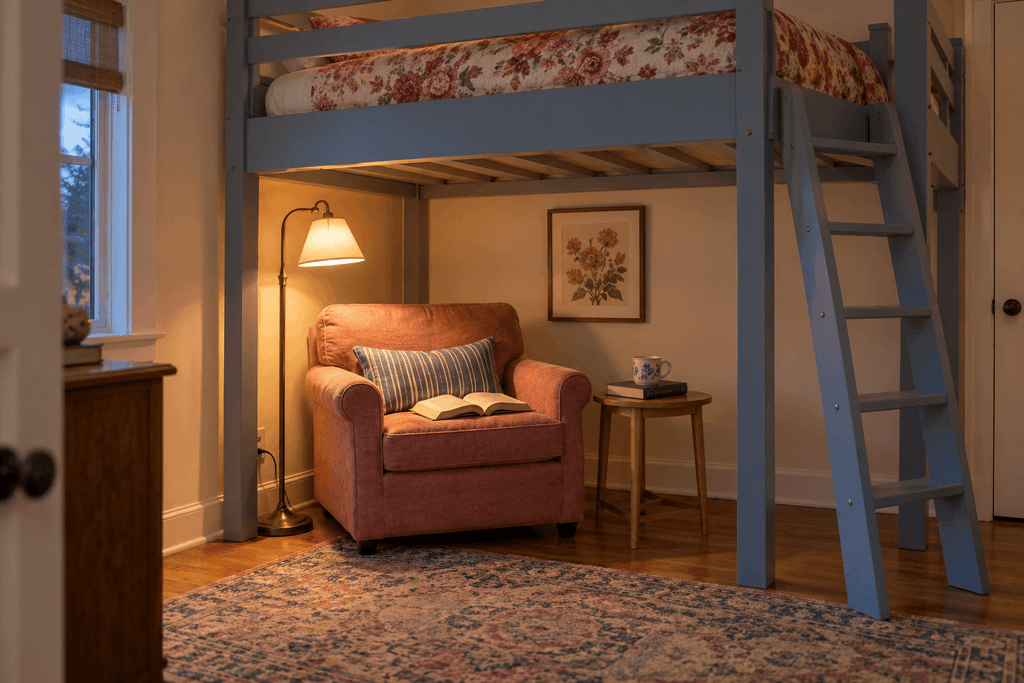
A floor lamp belongs only where its base and stem leave the chair, ladder and walking route usable. An adjustable head is helpful only if it can reach the page without creating a head-height obstacle.
For a low lounge seat, repeat the test from that lower position. A fixture hidden from someone sitting upright at a desk may be directly visible from a cushion.
For A Lounge: Brighten A Surface, Not Just The Frame
If the space is mainly for relaxing, a modest lamp directed toward a nearby wall can provide softer surrounding light.
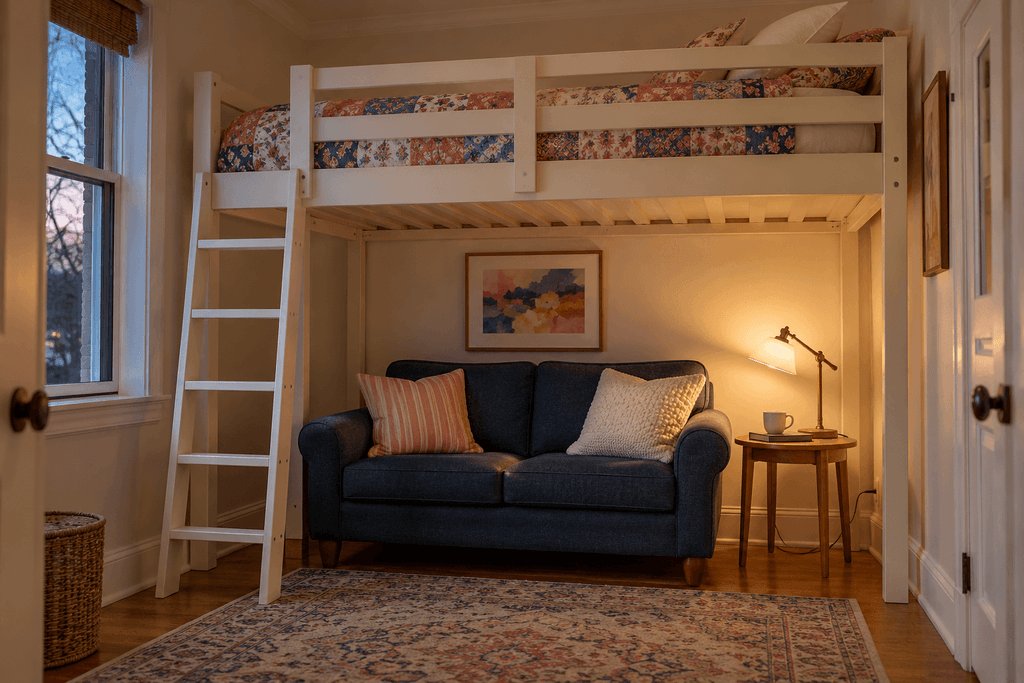
The effect depends on the wall. A light matte finish reflects light differently from dark fabric, timber slats or shelving full of objects.
Keep a separate reading light if you also use the area for books. A comfortable decorative glow does not necessarily perform both jobs.
Position The Light Without Putting Glare In Your Eyes
Check both direct and reflected glare.
Direct glare is the bright source you can see from your normal position: an uncovered bulb, a bare strip or an exposed light-bar face.
Reflected glare appears when that source reflects in your monitor, glossy desk or another surface.
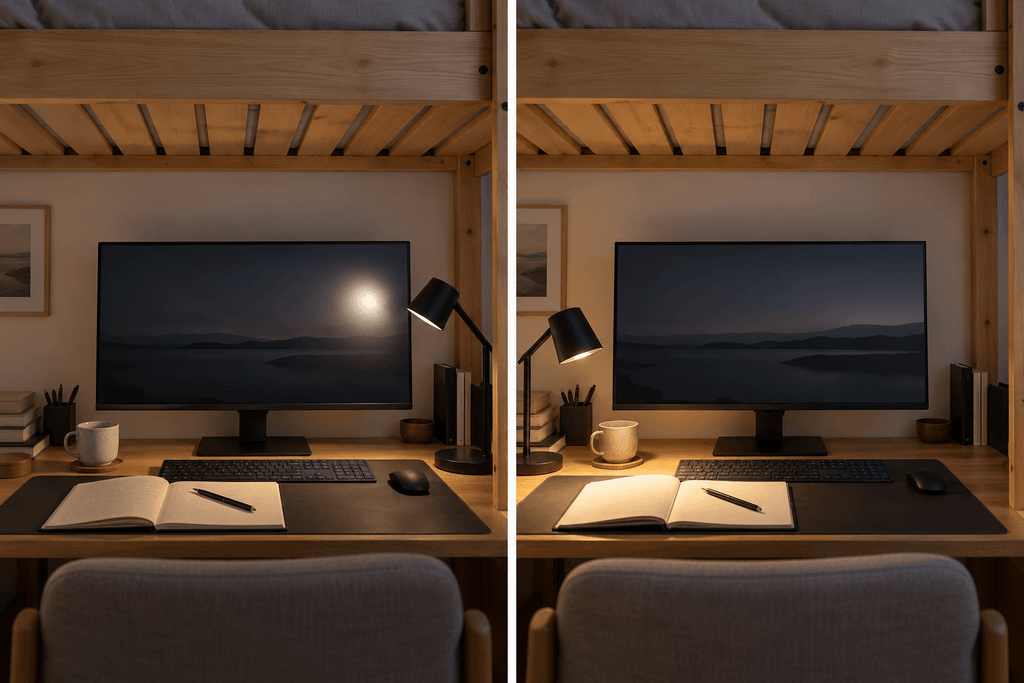
Sit down and look at the screen with the new light on. Temporarily darkening the screen can make reflections easier to spot; then check again with your usual work displayed.
Move or aim the lamp before increasing its brightness. You may need to shift it sideways, lower its head within the permitted adjustment range or direct it farther onto the page.
OSHA advises positioning task lights so they do not reflect on the monitor and using shielded or indirect lighting to limit intense sources in the field of view.
A diffuser can soften the appearance of individual LEDs, but it does not guarantee a glare-free result. A luminous bar directly in your sightline may still be uncomfortable.
Use only a diffuser or accessory intended for the light. Do not cover a fixture with fabric, paper or improvised materials to dim it.
Use Under-Platform Lighting Only Where The Installation Is Permitted
A slim light bar or strip can distribute light across the under-loft area when both the bed and lighting instructions permit the installation.
Check the complete arrangement before buying:
- Mounting: Is that attachment method allowed on the exact bed and surface?
- Clearance: Does the fixture reduce headroom or sit where a chair back will strike it?
- Visibility: Is the emitting face exposed from the desk or lounge position?
- Ventilation: Can the light and its power supply remain uncovered as instructed?
- Cable route: Can the wiring reach power without crossing the ladder or creating hanging loops?
- Controls: Can you operate it from the area it serves?
Avoid assuming that stronger adhesive is the answer to a strip that repeatedly comes loose. The installation may be unsuitable for the finish, location or contact it receives during normal use.
If you cannot establish an approved mounting method, use an independently supported light instead.
Keep Cables And Controls Out Of The Climbing Route
Plan the power connection before settling on a lamp position.
A cord should not cross ladder rungs, run through a walking route, become pinched by moving furniture or hang in a loop beside the bed. Do not route it through guardrails or modify the bed to conceal it.
Keep power supplies accessible and ventilated according to their instructions. Follow the lighting product’s limits for connections and accessories rather than joining unrelated strips or adapters.
In a dorm, use the power arrangements permitted by housing rules. Keep plugs and controls reachable without climbing over furniture.
For lighting below the loft, place the switch where you use that area. A room light or reading lamp for the upper sleeping position is a separate need; do not solve it by stretching the lower light’s cord toward the mattress.
Three Under-Loft Lighting Setups To Try
These are illustrative arrangements, not tested layouts for a particular bed.
A Full-Size Loft With A Desk Against The Back Wall
Start with a stable adjustable desk lamp or a compatible desk-clamp lamp. Aim it across the notebook and keep it out of the monitor’s reflection.
Use some surrounding room light. If the back wall remains dark, test an additional indirect source only after the task light is working.
The wider bed does not automatically require lights around its entire perimeter.
A Loft With A Reading Chair Beneath It
Position a shaded reading lamp beside the chair where it clears the ladder and the route in and out. Test it while sitting back with your book.
If the floor cannot accommodate a lamp, consider an appropriately installed wall light. Keep mounting and reach practical rather than squeezing a stand between the chair and ladder.
A Loft With A Lounge And Occasional Laptop Use
Begin with soft light across a nearby wall. Add a local light when you need to read paper or write, rather than turning decorative lighting up until it becomes harsh.
Check glare from the reclined position as well as upright sitting. Keep all lights and cables clear of loose cushions and blankets as their instructions require.
Test The Setup Before Adding Another Fixture
Try the lighting after dark, with the room arranged as you normally use it.
Read a page, write a few lines, look at the screen and reach for something at the side of the desk. Then stand up, pull the chair out and check the ladder route.
If a problem remains, change one thing at a time:
- The page is dark: Aim the task light at it or choose a more suitable task light.
- Your hand blocks the light: Try the other side.
- LEDs are distracting: Change the permitted position, use an intended shield or choose a different fixture.
- The screen reflects the lamp: Reposition the source and check the monitor angle.
- The whole area feels gloomy: Improve surrounding illumination.
- The fitting gets bumped: Reassess its location, support and clearance.
You may finish with one adjustable lamp and the room light already in place. Another layout may benefit from a task light plus softer background illumination.
The aim is to see comfortably beneath the loft bed while keeping the desk, seat and climbing route usable. More fixtures are useful only when they solve a remaining problem.