Small Bedroom Layout With a Radiator Under the Window: Where Everything Can Go

Disclosure
This post may contain affiliate links. If you purchase through these links, I may earn a small commission at no extra cost to you. As an Amazon Associate I earn from qualifying purchases.
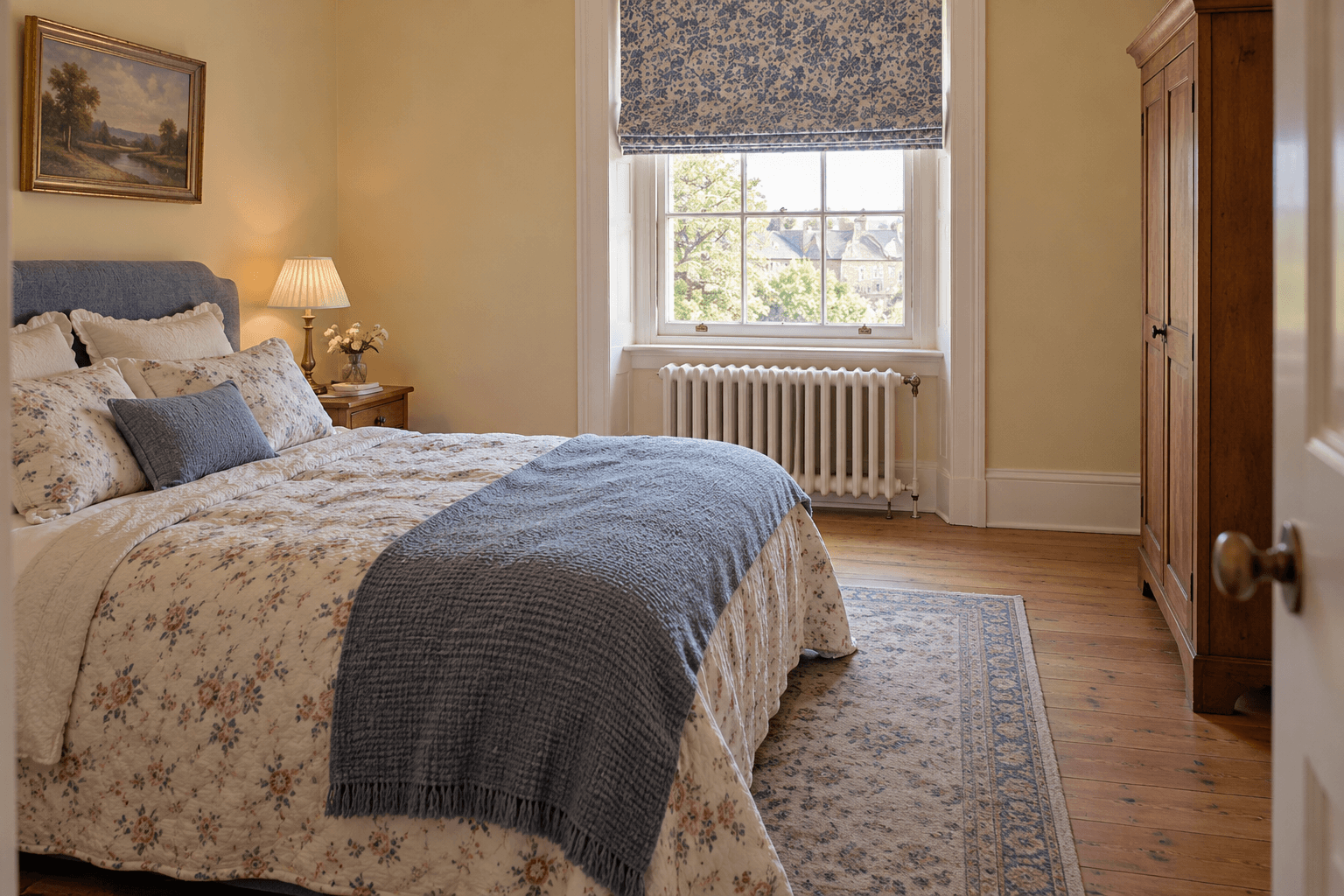
A radiator under the window can remove the most obvious spot for a desk, dresser or bed. Once you account for the bedroom door and closet, the remaining walls may seem to offer very few choices.
The answer isn’t always smaller furniture. Sometimes rotating the bed, moving a dresser or giving up a second nightstand creates a more usable arrangement.
For a small bedroom layout with a radiator under the window, start by treating the radiator as a fixed part of the room. Then compare bed positions against the space needed for clothing storage, door movement and everyday access.
This guide focuses on existing hot-water and steam radiators. Electric baseboard heaters and electric radiators have their own placement requirements; don’t apply hot-water radiator advice to them.
Start With The Space You Cannot Fill
Before moving the bed, measure the room’s fixed features:
- The radiator’s width and projection into the room, including its valves and exposed pipes.
- The window’s position and how it opens.
- The bedroom door’s full swing.
- Closet doors and the space needed to use them.
- Outlets and any other fixed obstructions.
Include an existing radiator cover in your measurements. Its outer dimensions may take up considerably more room than the radiator itself.
Next, establish the clearances required for your particular radiator and nearby materials. Check the manufacturer’s instructions, or ask the landlord or a qualified heating professional if the equipment is unidentified.
There is no single furniture gap that suits every radiator and heating system. Access to controls, vents and servicing also matters.
Manufacturer Stelrad advises keeping radiators free of obstructing furniture and curtains so heat can circulate into the room. That makes an unobstructed window wall a useful starting point not a wasted opportunity.
Test The Bed On A Wall Beside The Window First
When the radiator occupies the window wall, begin by testing the headboard against either adjoining wall.
This positions the bed at a right angle to the window wall, rather than placing its headboard directly in front of the radiator.
It can work particularly well when one side wall is mostly uninterrupted. However, check the foot of the bed: rotating the bed may solve the radiator conflict while creating a new squeeze beside the door or dresser.
Compare both side walls, even if one initially seems less attractive.
Consider:
- Can you enter without walking immediately into the bed?
- Can everyone who uses the bed get in and out?
- Does bedding hang into the radiator’s required clear space?
- Can closet doors open and clothing be reached?
- Is there room to pass the foot of the bed?
Choose the position that makes the whole room work, rather than the one that makes the bed look most centered.
If the room is long and narrow, the bed’s orientation becomes especially important. A position that leaves a continuous route along one side may be more practical than narrow, disconnected gaps around several pieces of furniture.
Try The Wall Opposite The Window Next
Putting the headboard on the wall opposite the window can leave the radiator fully visible and accessible.
This is worth testing when that wall is long enough and the bedroom door sits off to one side. It may also provide a natural place for bedside lighting without competing with window treatments.
The main constraint is room depth.
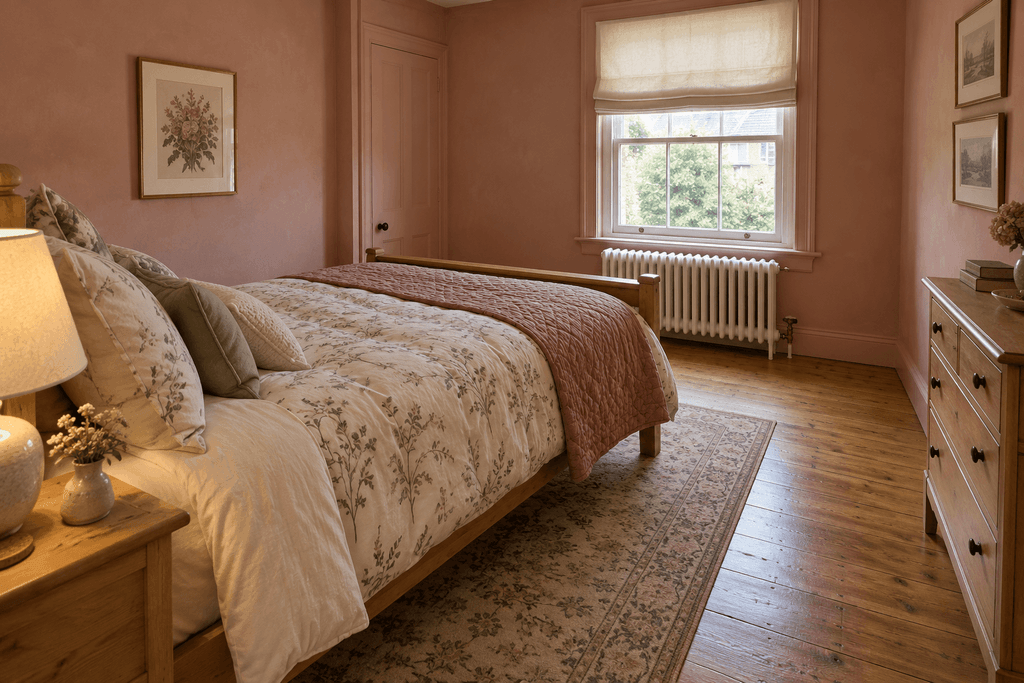
Measure from the headboard wall to the radiator’s outermost point, then account for the required radiator clearance and the route around the bed. Use the bed frame’s actual length, including any projecting footboard.
A mattress fitting on paper does not prove the complete bed will fit comfortably.
If the foot of the bed leaves too little space, consider whether a bulky frame is causing the problem. A slimmer frame may preserve the mattress size while reducing the overall footprint but measure the potential replacement before assuming the difference is enough.
Avoid solving a tight foot-of-bed passage by moving a dresser into the radiator space. That simply transfers the obstruction.
Decide Which Compromise Is Least Disruptive
Small bedrooms often cannot provide a centered bed, two substantial nightstands, a large dresser and generous circulation at the same time.
The useful question is which compromise causes the least daily inconvenience.
For example:
- Removing one nightstand may preserve access to the radiator and closet.
- Moving a dresser may allow the bed to use a better wall.
- Placing one long side of the bed against a suitable wall may create a wider route on the other side.
- Choosing a less bulky bed frame may recover space without changing the mattress.
A wall-side bed has consequences: making it is harder, and a second sleeper may have to climb across. That can be manageable for one person and unsuitable for a couple.
Similarly, storage under the bed only helps if you can reach it. Drawers that cannot open beside a wall or another piece of furniture add little practical storage.
Our guide to organizing a small bedroom can help you decide which belongings need convenient access and which can move elsewhere.
Where Can A Desk Go If The Window Wall Is Unavailable?
A desk beneath the window is a common bedroom arrangement, but it should not be the automatic choice when a radiator is there.
Test another location before trying to fit a work surface over the heater.
Beside The Window
A short section of wall next to the window may accommodate a desk while leaving the radiator clear.
Measure the entire workstation, including the chair in use. Check that the chair does not roll back into the bed and that the desktop or side panel does not intrude into the radiator’s required space.
Daylight can still reach a desk positioned beside the window; it doesn’t need to sit directly beneath it.
Along A Side Wall
A compact desk may fit farther along the same wall as the bed or on the opposite side of the room.
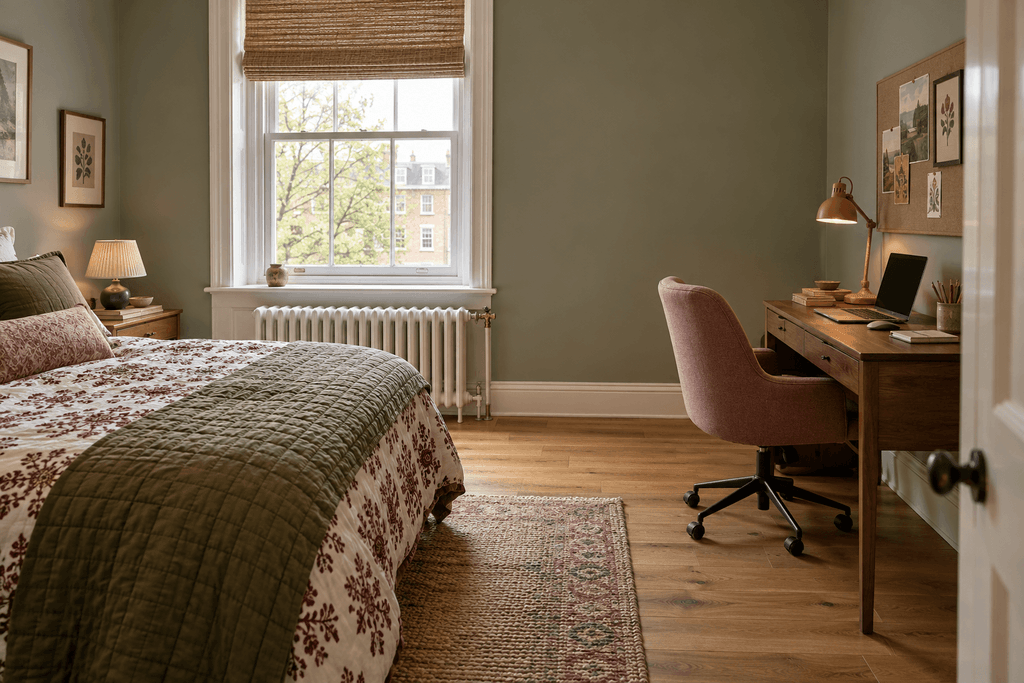
Keep enough usable depth for your equipment. An extremely shallow surface that technically fits can be frustrating if there is nowhere to position a keyboard, mouse or notebook.
Also check where the chair goes when you stand up. A desk that fits only with its chair tucked completely underneath has not passed the layout test.
In Place Of A Nightstand
A desk can sometimes provide both a work surface and somewhere for bedtime essentials.
This works best when the chair has a parking position and the desktop remains usable for work. Check the height from both the bed and the chair; a surface comfortable for one purpose may be awkward for the other.
What About A Desk Over The Radiator?
An open-legged desk is not automatically suitable just because the radiator remains visible beneath it. The desktop, equipment and seated position may still conflict with heat flow, material requirements or access to controls.
Treat this as an arrangement requiring specific approval for the heater and furniture involved. If you cannot establish that it is suitable, choose another position.
Move Storage To The Walls That Can Accommodate It
Once the bed position works, assign storage to the remaining usable sections of wall.
Start with the largest item, usually the wardrobe or dresser. Test opening doors and drawers before adding smaller pieces around it.
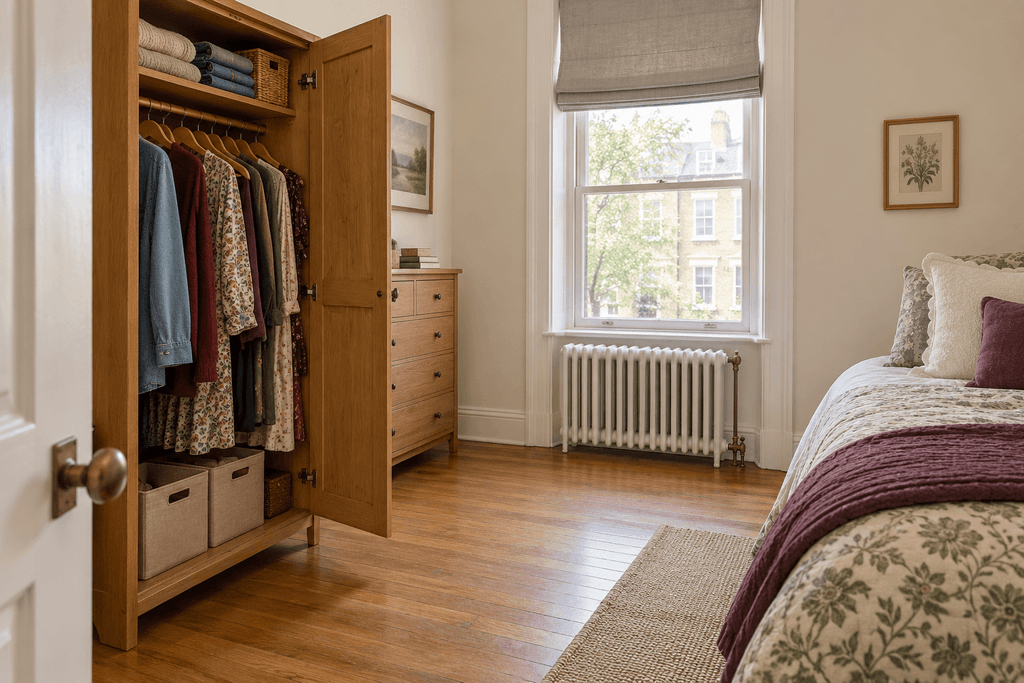
A dresser beside the bedroom entrance may work well if the door can open fully and the drawers remain accessible. A narrow wardrobe may fit on a side wall, provided it doesn’t leave an unusable passage beside the bed.
Don’t judge storage by its closed footprint alone.
A tall cabinet with blocked doors is less useful than a smaller unit you can use comfortably. Follow the furniture manufacturer’s anchoring instructions, too; a piece fitting the floor space does not remove its installation requirements.
If a dresser is the item preventing a workable layout, consider whether its contents could move into existing closet shelves, hanging organizers or accessible under-bed storage. These ways to store clothes without a dresser can help you assess the alternatives before buying anything.
Let The Window Treatment Work With The Radiator
Check curtains in their closed position, not just when they are neatly drawn aside.
Full-length panels that look unobtrusive during the day may cover the radiator at night. Stelrad advises against obstructing radiators with curtains because this restricts heat distribution.
Depending on the window and heating equipment, a suitably fitted blind or shorter curtain may be easier to accommodate.
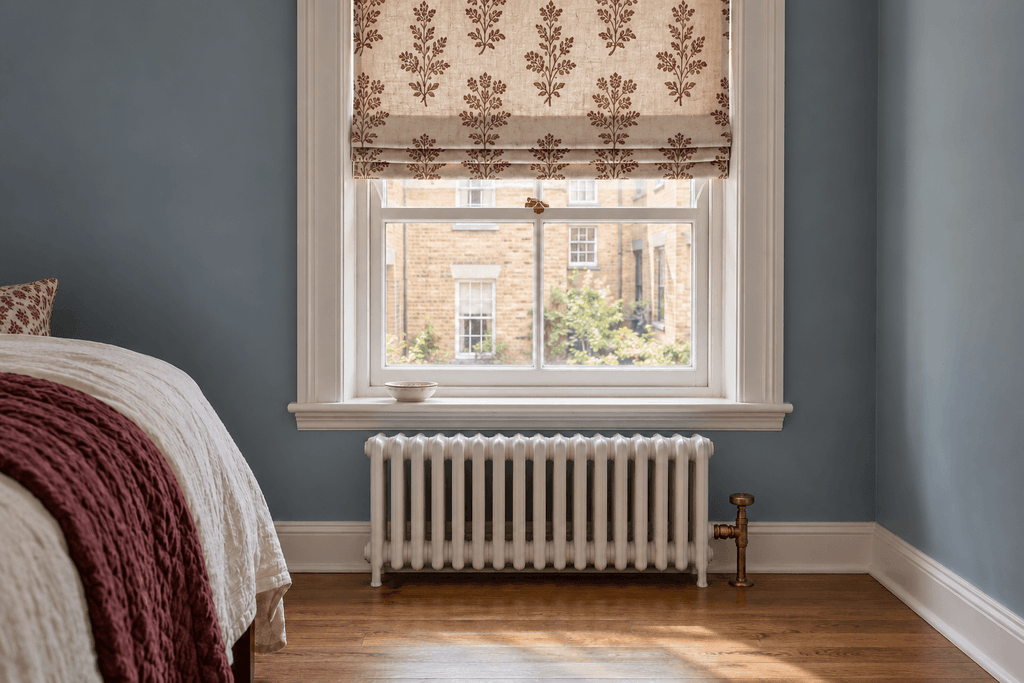
Check that the treatment:
- Meets the heater’s applicable clearance requirements.
- Allows the window to open as needed.
- Leaves controls accessible.
- Provides the privacy and light control you require.
Don’t tuck fabric behind or drape it over a radiator as a general workaround. Follow guidance for the particular installation.
The Area In Front Of The Radiator Can Stay Empty
A clear stretch beneath a window can feel unfinished when every other wall contains furniture.
It does not need a bench, basket or plant stand.
That open area can provide access to the window, room to clean and breathing space in an otherwise furnished bedroom. You can make the room feel complete through bedding, artwork and coordinated window treatments without occupying every patch of floor.
A rug may help connect the bed and surrounding furniture visually, provided it lies flat, does not interfere with doors and stays clear of any heater-specific restrictions.
An intentional layout includes the space you leave available.
What If The Bed Only Seems To Fit In Front Of The Radiator?
First, check whether that is genuinely the only position or simply the only position that preserves every other piece of furniture.
Temporarily remove the dresser, spare chair or second nightstand from your plan. Try both side walls again, using the bed frame’s full dimensions.
If an alternative works, decide whether relocating that secondary item is an acceptable trade.
If no arrangement works, don’t assume that a small gap, an open headboard or switching the radiator off makes the position suitable. Ask for advice specific to the heating system before accepting that layout.
Renters should raise a persistent conflict with the landlord. Relocating or changing a radiator is a heating-system decision, not a routine furniture adjustment.
Sometimes the honest conclusion is that the current furniture cannot all fit while preserving the room’s essential functions. Identifying which item causes the conflict is more useful than buying several smaller accessories around it.
Test The Layout Before Calling It Finished
Once the furniture is in position, use the bedroom normally.
Open the closet. Pull out the desk chair. Make the bed. Reach the window handle. Check whether a duvet, laundry basket or curtain has drifted into the space you intended to keep clear.
Also confirm that radiator controls and service points remain accessible. Furniture should not have to be dismantled for routine access.
The strongest bedroom layout around a radiator gives the bed a workable position, keeps clothing storage usable and leaves the heating equipment unobstructed. It may look less symmetrical than a showroom bedroom, but it should be easier to live in every day.