Where To Put Clean Clothes While Showering In A Small Bathroom
Disclosure
This post may contain affiliate links. If you purchase through these links, I may earn a small commission at no extra cost to you. As an Amazon Associate I earn from qualifying purchases.
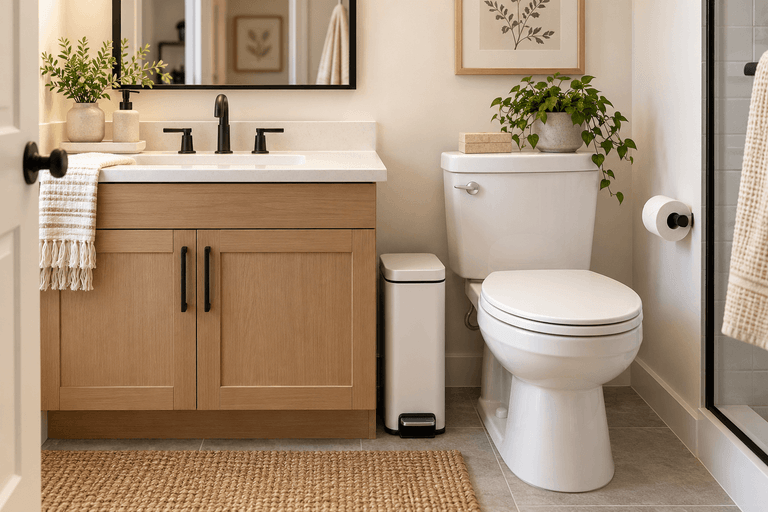
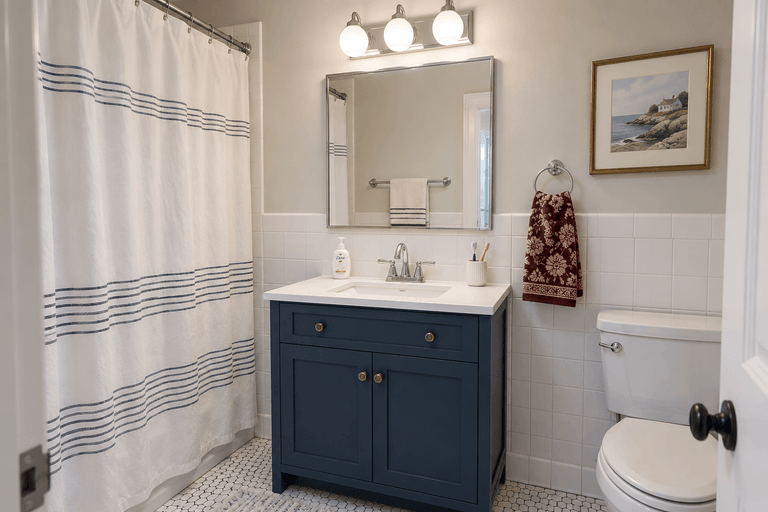
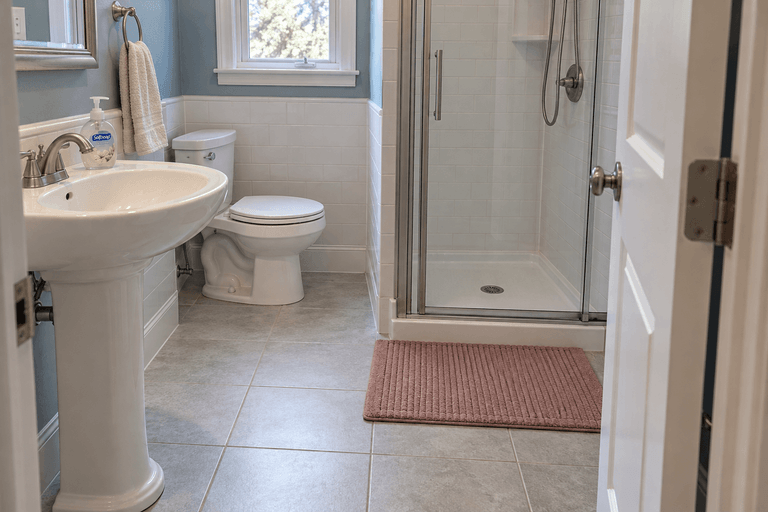
You bring clean clothes into the bathroom so you can get dressed privately after your shower. Then you look around: the basin rim is wet, the towel rail is occupied and there is no counter to put anything on.
The best place for clothes while showering is an existing clean, dry shelf or a suitable hook outside the splash area. Use a hanger or small bag to keep the whole outfit together where needed. If there is no reliable dry spot, a properly closed water-protective bag may help but it still needs somewhere secure to rest or hang.
You are making room for one change of clothes during one shower. You do not need to turn the bathroom into a dressing room or add permanent furniture to solve that temporary problem.
Find A Dry Place With The Bathroom Set Up For Showering
Check possible locations with the bathroom door in the position you use for privacy and the shower door or curtain closed as usual.
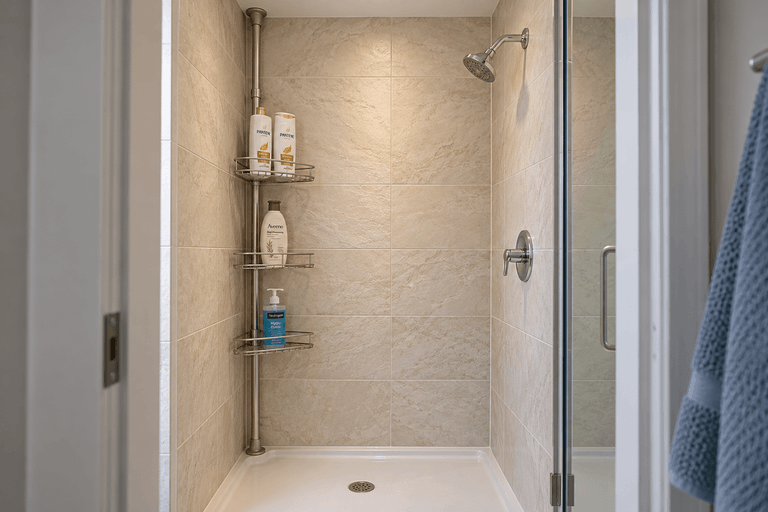
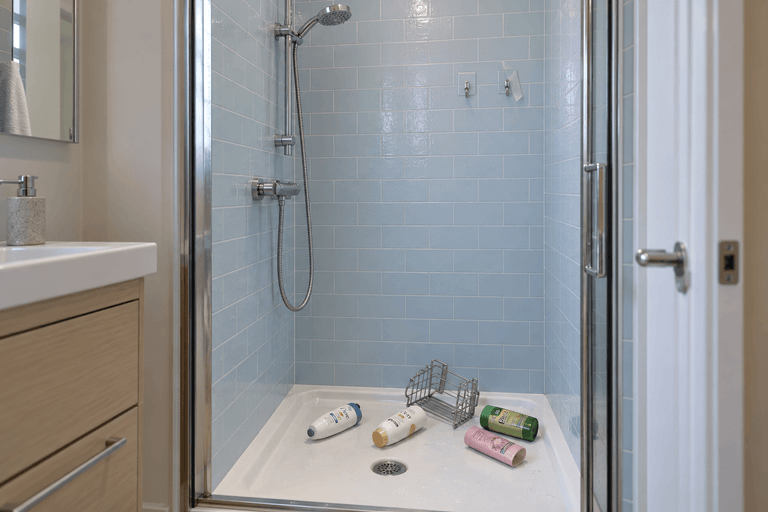
An apparently sheltered hook can become a poor choice when a long sleeve reaches the wet shower screen. A shelf beside the basin may also catch splashes when you wash your hands or reach across it.
Look for a location that meets three conditions:
- The clothes stay away from splash and wet surfaces. Check the lowest part of a hanging garment, not just the hook.
- You can open the door and move normally. Include the loaded bag or hanging outfit in that check.
- You can retrieve the clothes after drying off. Avoid a location that requires leaning over the basin or reaching across the shower opening.
Use what is already available before buying anything. A dry section of an existing shelf may solve the problem more simply than another organizer.
If shower water routinely reaches every plausible location, investigate the curtain, enclosure or spray direction. A clothes bag should not become a substitute for addressing water escaping across the bathroom.
Use A Suitable Hook For Clothes That Can Hang
A hook on the dry side of the room can hold a hanger carrying a shirt or other suitable garment. Keep small items together in a separate pouch so socks and underwear do not slip off a pile balanced on the hanger.
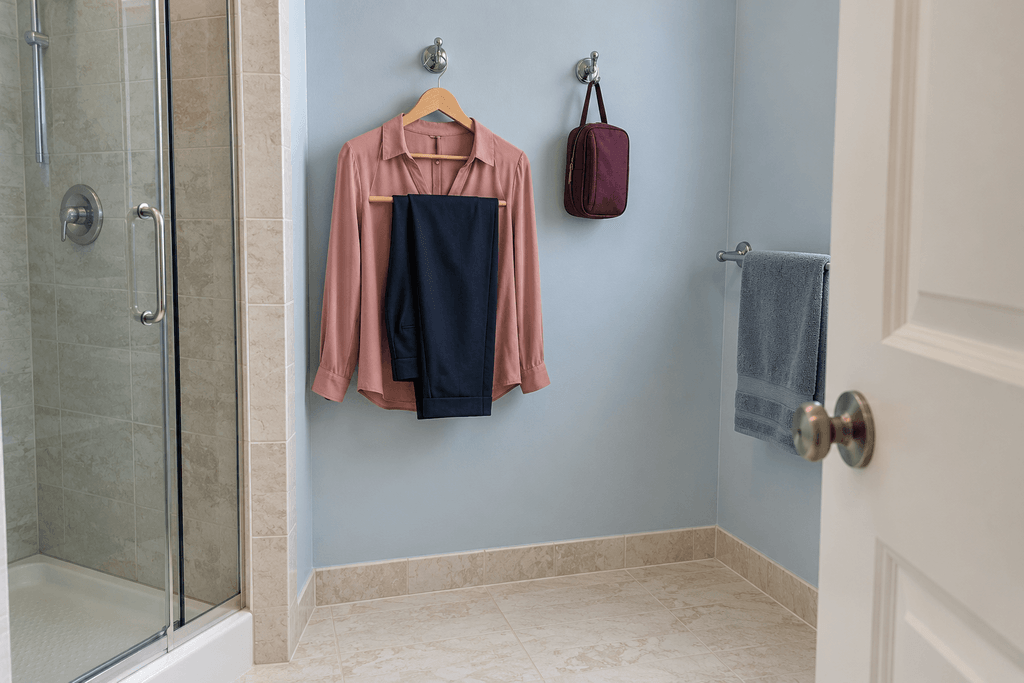
Choose support that suits the clothes. Avoid stretching a neckline over a small hook; use an appropriate hanger or fold the garment into a bag instead. Check that trouser legs, sleeves and straps remain clear of wet surfaces and the floor.
Check the hook’s capacity for everything it will carry, including the hanger or bag. Do not assume a small towel hook can support a heavy outfit plus a wet towel.
For an adhesive hook, match the product to the surface and bathroom conditions, and follow its preparation, waiting-time and removal instructions.
You do not need to add a hook inside the shower just because it is described as suitable for shower use. The clothes themselves still need protection from water.
Check Door Hooks With The Clothes In Place
An over-door hook can be useful where wall mounting is not an option, but check more than whether it fits over the top edge.
Confirm that the hook suits the door’s thickness and that the door closes and latches without force. Then check the projection of the loaded hook when the door opens.
The hook may clear the wall while the clothes or bag do not. A bulky outfit can brush the vanity, hang against a damp towel or obstruct the handle.
Keep the clothes on the side that stays accessible while you dress privately. Check that children or anyone else using the setup can reach it comfortably; a hook is not useful if retrieving the clothes requires climbing.
Test this before installing anything permanently or committing to a large over-door rack. One suitable hook may be enough for the temporary load.
Keep Folded Clothes On A Dry Shelf Or In A Removable Basket
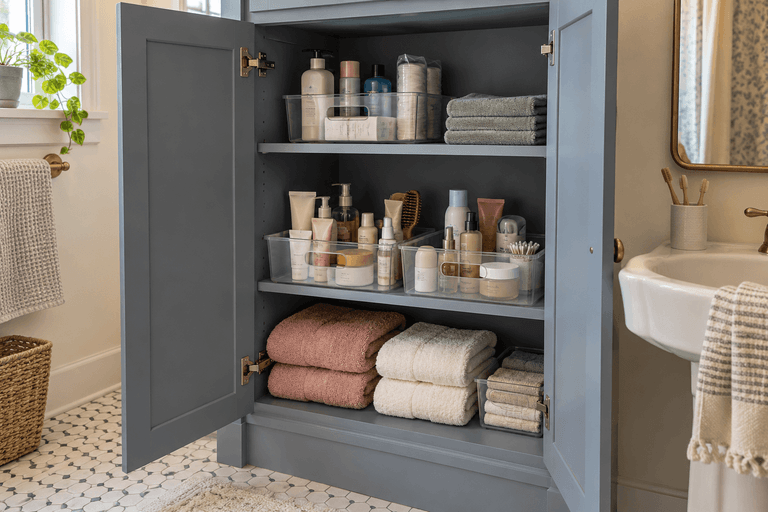
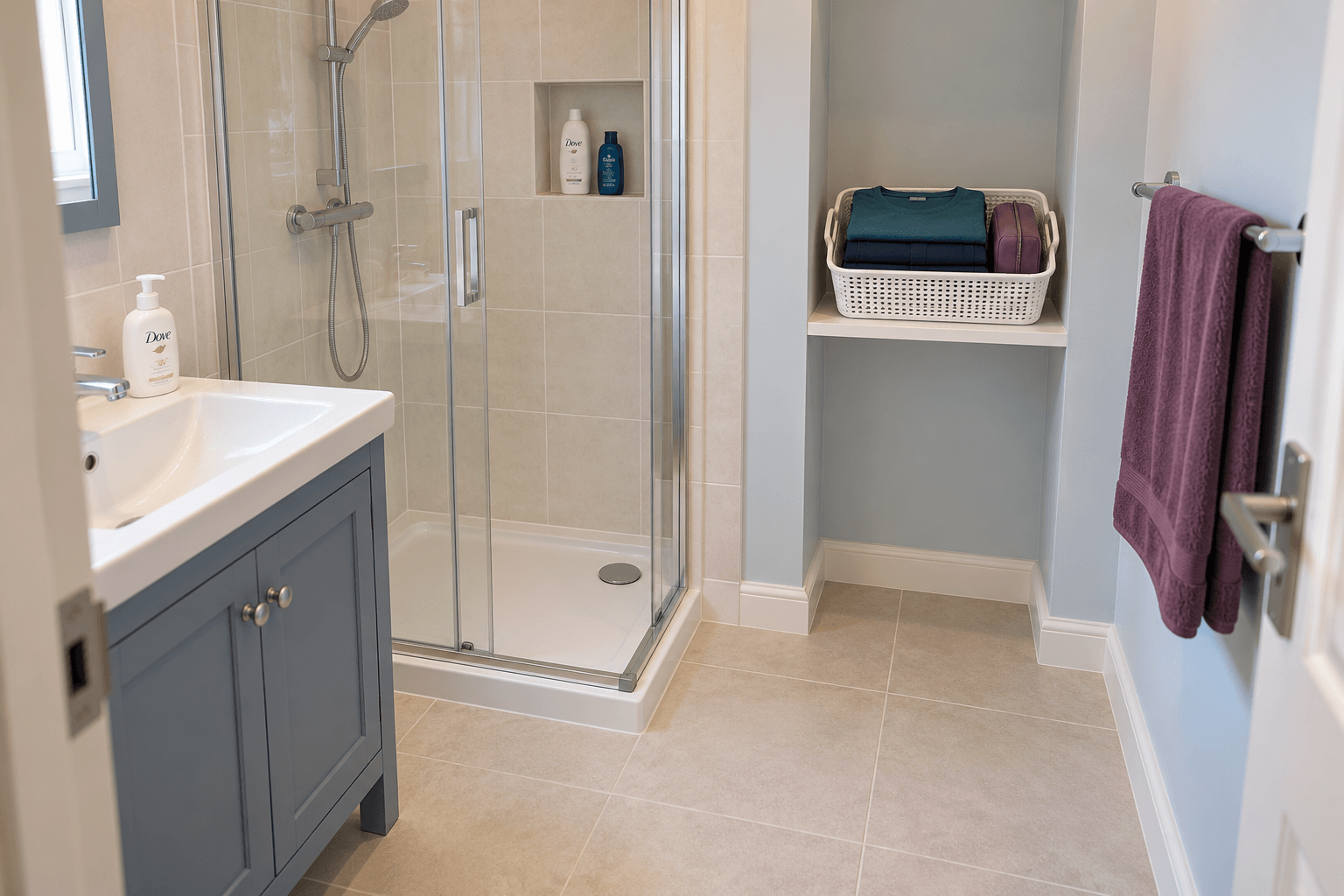
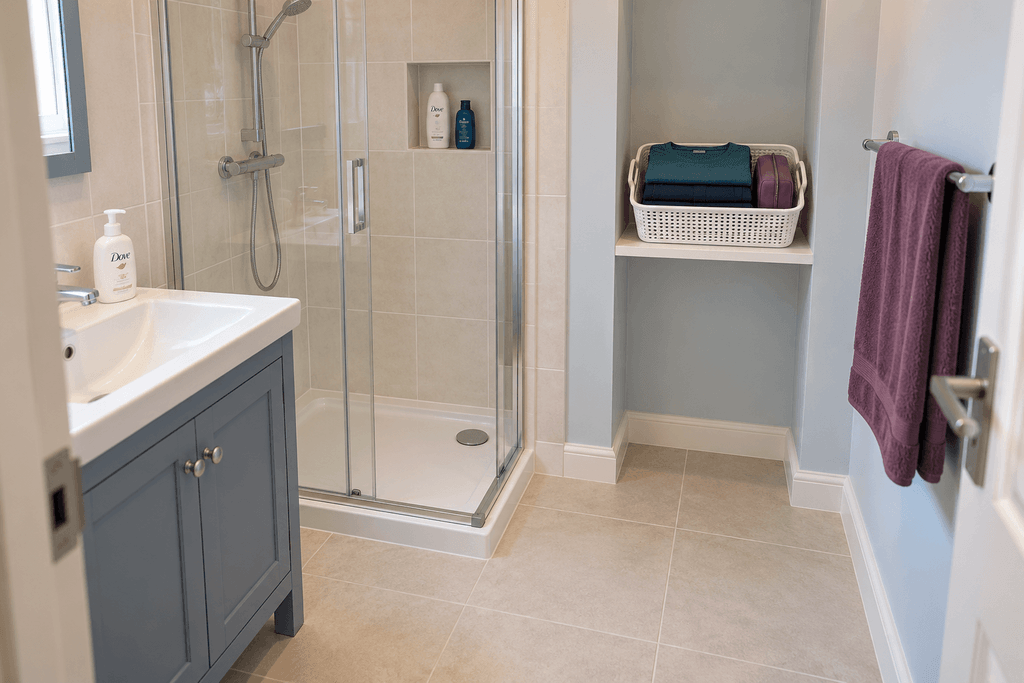
For clothes that are awkward to hang, use a clean, dry shelf or a small basket that fits securely on an existing surface.
Keep the outfit together and avoid tall stacks that fall when you take out the first item. Small pieces can sit in a pouch within the basket.
Check the surface under it. A perforated basket keeps items together but will not protect them if water enters through the sides or base. Likewise, a towel underneath does not turn a wet ledge into a dependable dry shelf.
Avoid balancing a basket on a narrow basin rim. It should rest fully on its support and leave the faucet, sink and cabinet doors usable.
If clearing one existing shelf is realistic, that is often preferable to adding a stool you must move for every shower. Our guide to organizing a small bathroom with no counter space can help you find a home for the toiletries currently occupying that shelf.
Take the clothes out when you get dressed and return the empty basket to its normal home. The bathroom only needs to hold the outfit temporarily.
When A Protective Bag Is The More Practical Option
A portable bag can suit a shared bathroom, particularly when you need to carry your outfit in and take everything out afterward.
Use one large enough to hold the folded clothes without making the closure difficult to operate. Keep the outfit separate from wet toiletries and the towel you will use to dry yourself.
A mesh bag, ordinary drawstring sack or open tote is not splashproof merely because it is washable. If water exposure is likely, check the bag’s stated protection, seams and closure instructions.
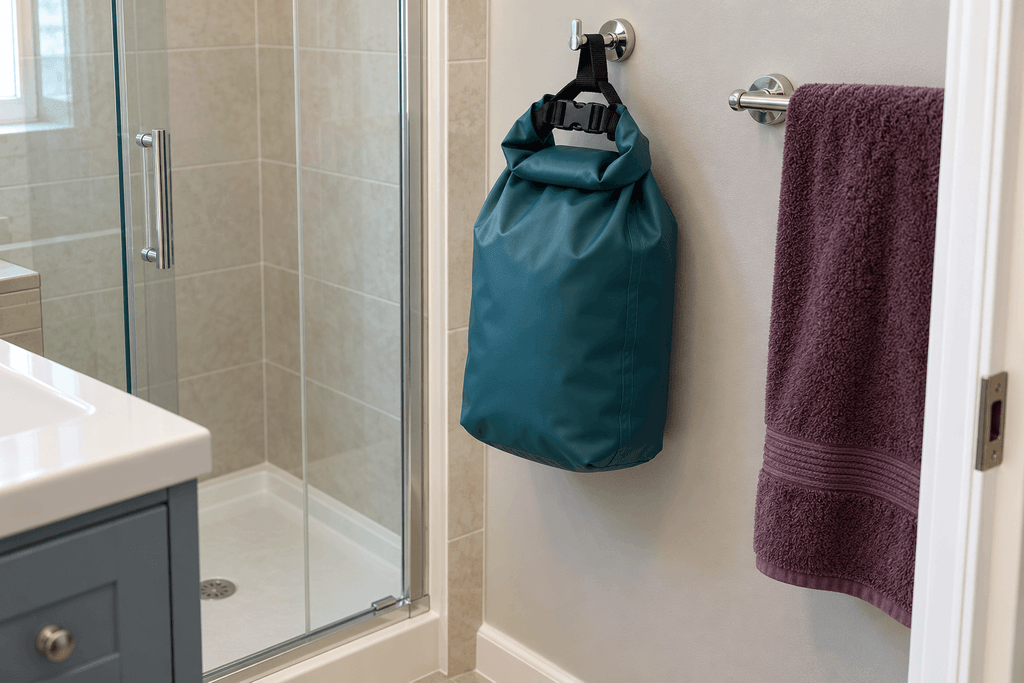
Even with a suitable bag, choose the most sheltered location available. Hang it only by a load-bearing attachment intended for that use, on a support capable of carrying the filled bag. Keep it out of the shower’s standing area and entrance.
After showering, dry your hands before handling the clothes. If the bag’s exterior is wet, wipe it before opening and keep the wet surface away from the contents. Do not transfer clean clothes onto a wet lid or counter while unpacking.
Empty and dry the bag afterward according to its care instructions. This setup is for transporting and temporarily protecting an outfit, not leaving clothes sealed away in the bathroom indefinitely.
Avoid Locations That Create Another Inconvenience
The toilet lid: it is not a dependable default shelf. It may be wet or need cleaning, items can slide off, and the clothes have to move whenever someone needs the toilet. Find a separate support where practical.
The closed hamper lid: it may appear convenient until you need to put the clothes you removed into the hamper. If you must lift off the clean outfit to open it, you have created another handling step. A separate bag or shelf can keep those tasks apart.
The shower screen or curtain rod: do not assume it is approved to carry extra items. Clothes can also extend onto the wet side even when the hanging point looks sheltered.
The floor or doorway: an open basket can catch drips, and a bag can obstruct the route out. Elevate the outfit on suitable support rather than making yourself step around it.
For a layout with no workable dry storage inside, consider whether you can leave the main outfit in the bedroom and use a robe for the journey. That is an option when privacy and the household arrangement permit it not a universal answer for everyone sharing a bathroom.
Set Up The Outfit Before Turning On The Shower
Bring in the complete change of clothes and put it in the chosen location before you start. Give your towel its own reachable place, and decide where the clothes you remove will go.
That keeps three different groups from landing together: the clean outfit, clothing destined for the wash and pieces you intend to wear again. For that last category, see where to put worn-but-not-dirty clothes in a small bedroom.
Run through the movement once: close the bathroom door, enter and leave the shower, reach for the towel and retrieve the outfit. You should not have to move the clothes repeatedly or stand in the doorway to dress.
The simplest useful setup is one dry place for the outfit, a separate place for the towel and a clear area to get dressed. If an existing hook or shelf provides that, you do not need another piece of bathroom furniture.