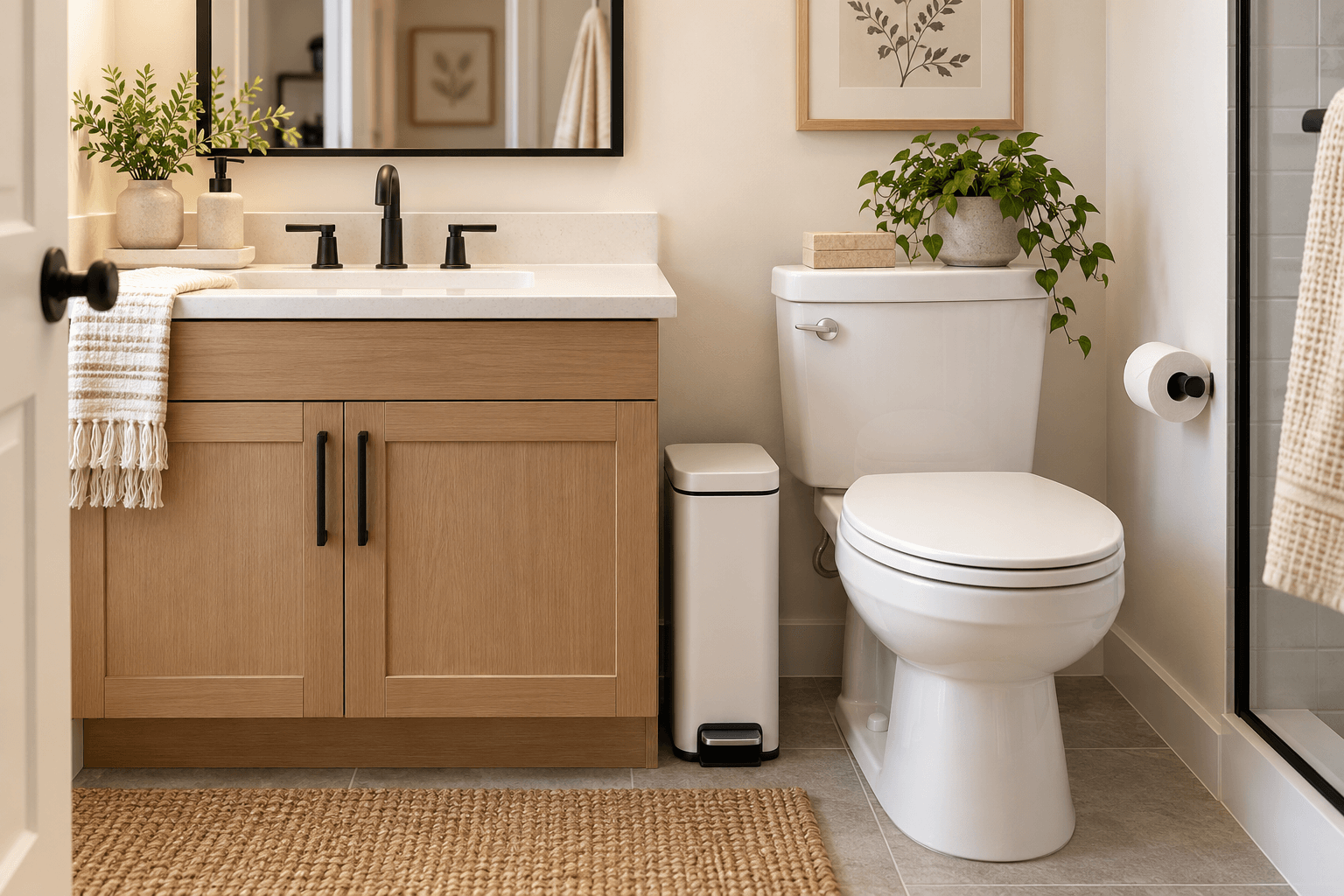
Where to Put a Trash Can in a Small Bathroom Without Blocking Anything
Disclosure
This post may contain affiliate links. If you purchase through these links, I may earn a small commission at no extra cost to you. As an Amazon Associate I earn from qualifying purchases.
A bathroom trash can can fit neatly into a gap and still be awkward to use. Its lid catches the sink, the pedal faces the wall, or emptying it means pulling it out from behind the toilet.
If you are deciding where to put a trash can in a small bathroom, start with a location you can reach, operate and clean around. Beside the vanity, beside the toilet, beneath a suitable sink or inside a cabinet may work but each needs a different check.
An empty gap is a candidate, not proof that the bin belongs there.
Check More Than the Bin’s Footprint
Measure the bin’s maximum outside width and depth, including projecting handles, hinges and the pedal. Then check the space it uses when open.
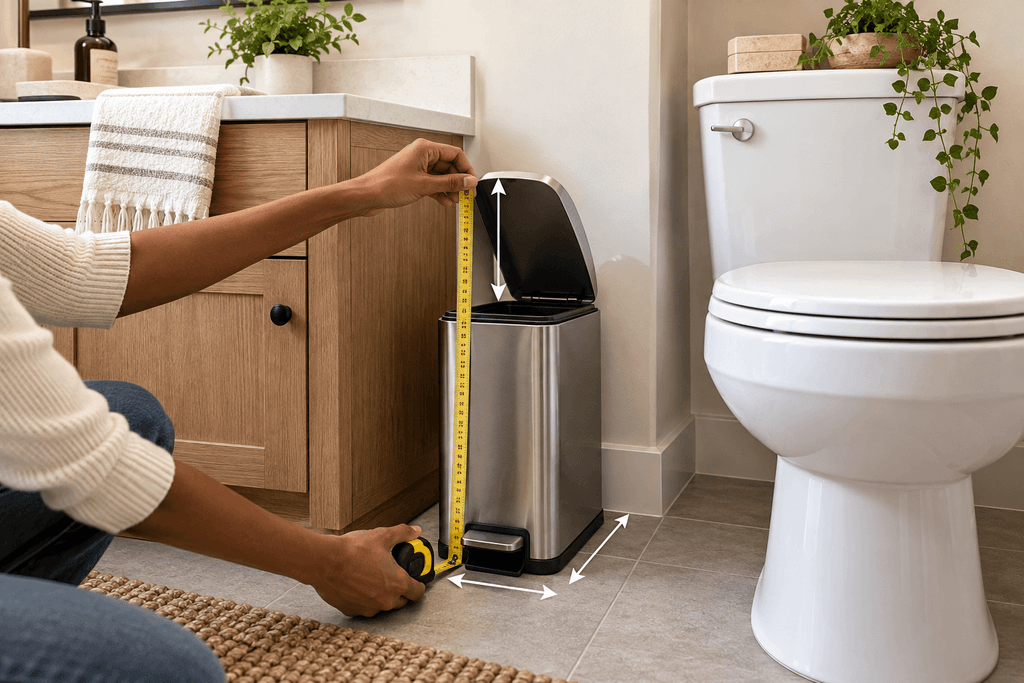
Before choosing a position, establish whether you can:
- Open the lid through its normal movement.
- Reach the pedal, push button or other control.
- Put waste inside without awkward reaching.
- Remove the bag or inner bucket.
- Open nearby doors and drawers.
- Move the bin to clean the surrounding floor.
Capacity in liters or gallons does not tell you these things. Two bins with the same capacity can have different shapes and opening mechanisms.
Measure the bin in use, not just the closed container. If the listing only gives closed dimensions, check the manufacturer’s specifications or ask for the missing clearance information.
Beside the Vanity: Check Doors, Drawers and Pedal Access
Beside the vanity is a useful starting point when the bin is close to where you use tissues, cotton pads and other small bathroom items.
A narrow gap may suit a slim bin, but check whether the vanity door or drawer opens into that gap. Test the cabinet fully open rather than judging the space with everything closed.
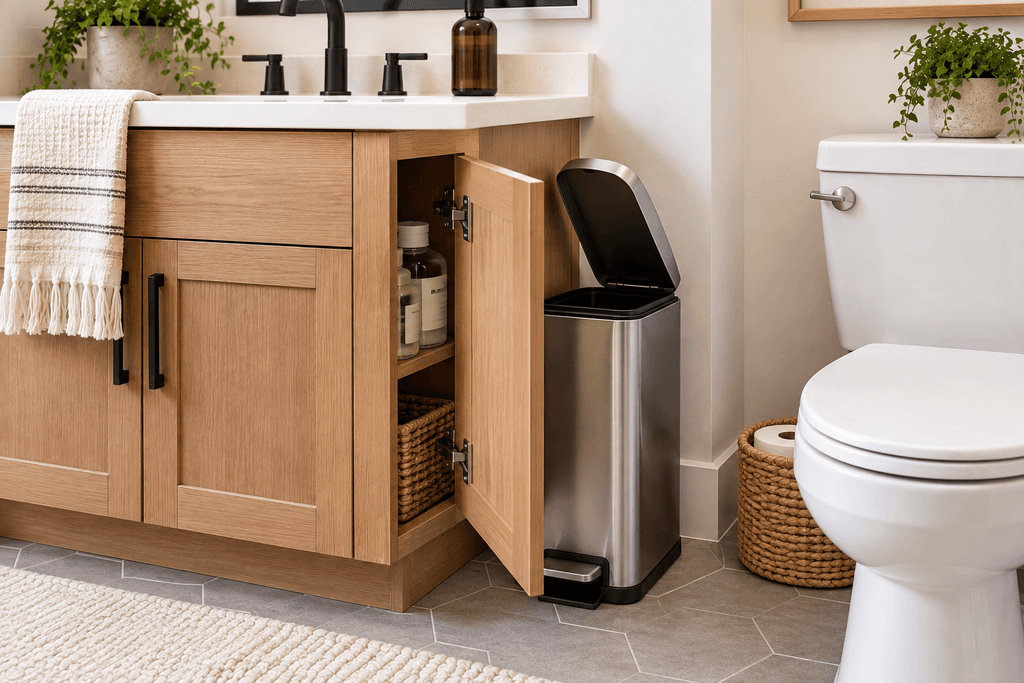
For a pedal bin, leave the pedal facing a direction you can comfortably approach. Turning the bin sideways to make it fit can put the control against the vanity or wall.
Also check the lid. A bin positioned partly beneath an overhanging countertop may fit when closed but catch the underside as it opens.
If the side gap makes operation awkward, an exposed position near the vanity may work better. Concealing the bin is less useful when every use requires pulling it out.
Beside the Toilet: Check the Position While Seated and Standing
A bin beside the toilet can be convenient, especially for personal-care waste. The location needs to work for the person using the bathroom, not just fit alongside the toilet base.
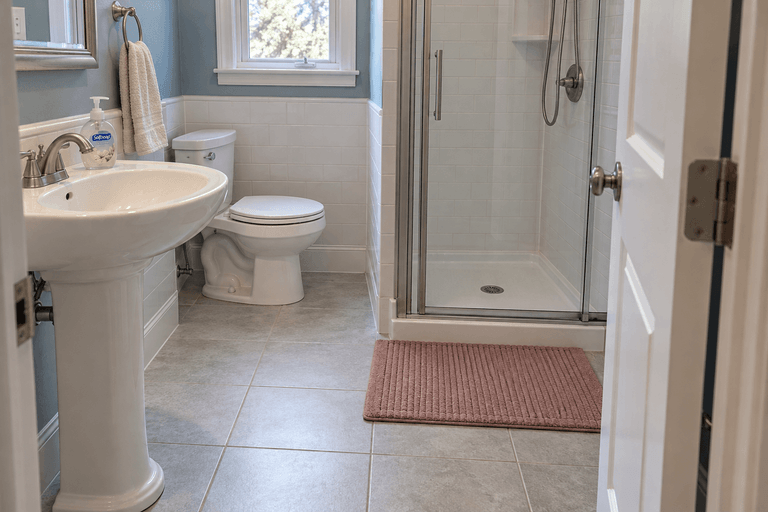
Check the position while seated, standing and moving past. The bin should not crowd your feet, require an awkward twist or interfere with nearby furniture.
Look behind and around it too. Keep the toilet’s shutoff valve reachable and preserve access needed for cleaning or maintenance.
Be Cautious About Hiding It Behind the Toilet
A gap behind the toilet may conceal the bin, but it can make reaching the opening and lifting out a full bag difficult.
Try the emptying movement before committing to that location. If you must lean across the toilet or squeeze the bag past plumbing, choose a more accessible position.
A modest bin in view can be more practical than one hidden in a space you cannot comfortably use.
Under a Pedestal or Wall-Mounted Sink: Check the Space Above
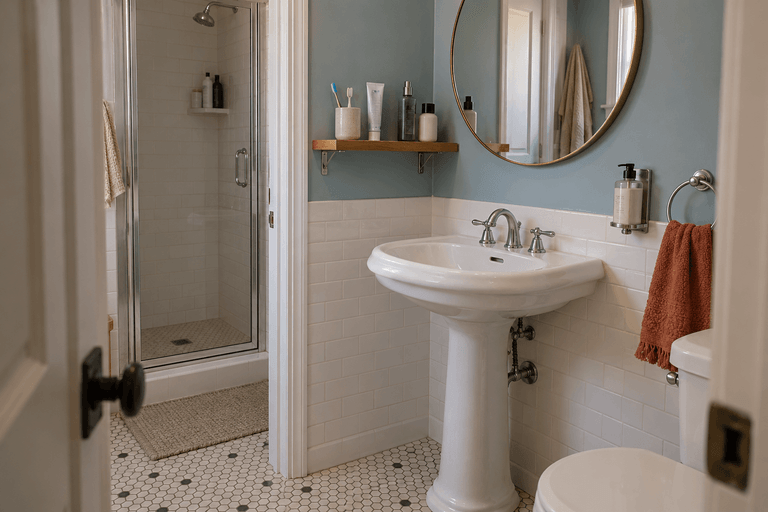
The floor beneath a sink may look available, but the basin, pedestal and pipes determine the usable shape.
Measure at the height of the bin and its moving lid. A pedestal that flares outward near the floor can prevent a bin from fitting where the upper gap appears wide enough.
Keep plumbing accessible, and avoid a position where the bin presses against pipes or must be moved to reach a shutoff valve.
Closed Height Is Not Enough
A hinged-lid bin needs space above and sometimes behind it as the lid moves. A different opening mechanism may use the space differently, so compare the actual product rather than assuming all small bins behave alike.
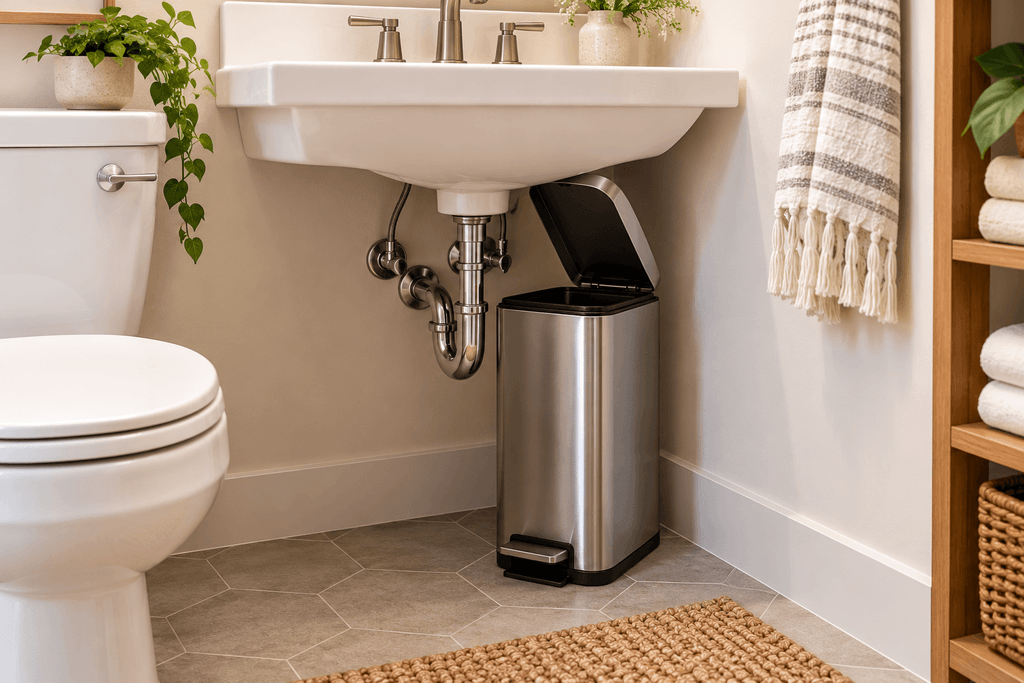
For example, imagine a hypothetical sink recess with 16 inches of unobstructed height. A bin 12 inches tall when closed appears to fit. If its published lid-open height is 19 inches, it cannot open fully beneath that obstruction.
Pulling it forward may solve the height problem, but that creates a different routine: moving the bin whenever you need to use it.
An open-top design avoids lid movement, but leaves the contents visible. Choose according to the household’s preferences and the waste being collected, not just the smallest dimensions.
Inside a Vanity Cabinet: Plan Opening and Emptying Together
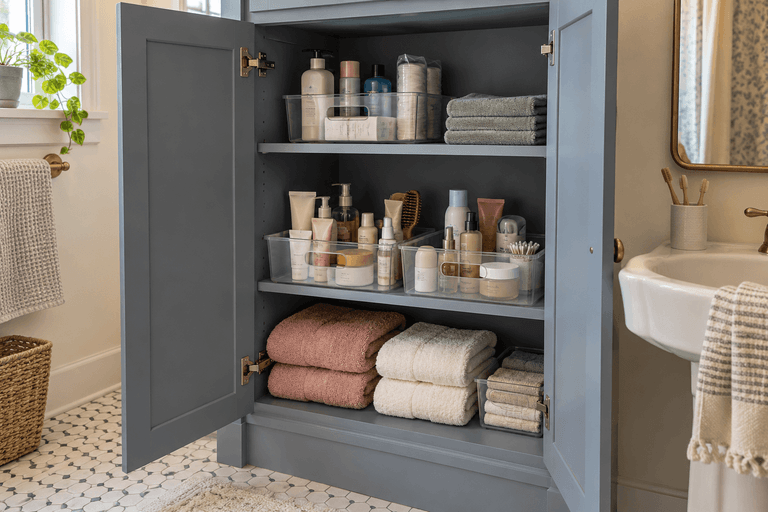
A cabinet can conceal bathroom waste, provided the bin fits around the plumbing and remains easy to use.
You will need to open the cabinet first. Decide whether that extra action is acceptable during your normal routine, particularly if several people share the bathroom.
A Loose Bin on the Cabinet Base
Position it within the accessible opening, not behind bottles or other supplies. Check that the cabinet door opens far enough to lift out the bin or remove its bag.
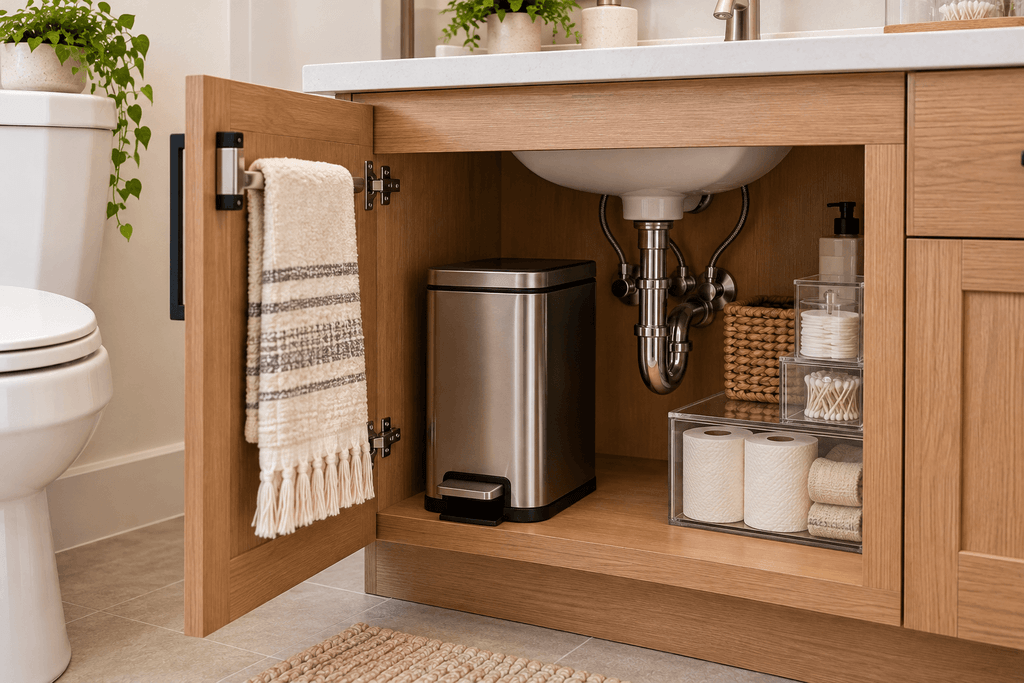
If there is an inner bucket, try its removal path separately. The container can fit inside while its handle or loaded bucket catches on the shelf, frame or pipes.
Avoid surrounding the bin with belongings that must be relocated every time you empty it. Our guide to organizing deep bathroom cabinet shelves explains how to keep stored items accessible through the cabinet opening.
A Door-Mounted Bin
Use a system intended for that mounting method. Follow its door-thickness, clearance, load and installation requirements, including any rental restrictions.
Check the cabinet with the bin installed and loaded. It should close normally without the bin contacting plumbing, shelves or other stored items.
Do not assume a small wastebasket can be safely converted into a hanging bin with an improvised hook.
Behind the Bathroom Door: Test the Whole Swing
Behind the door is not automatically spare space. It may be part of the door’s movement or the route you use to enter.
Test the proposed location with the door fully open and closed. Include any projecting pedal and the lid’s movement.
Reject the position if:
- The door contacts the bin.
- The bin prevents the door from opening normally.
- Reaching it requires repeatedly closing the door or moving the bin.
- It obstructs the entrance or exit.
The space can work when the door and bin operate independently. Otherwise, choose another location rather than making the room harder to use.
Match the Opening Method to the Location
The same bin shape can work differently depending on how it opens.
Step pedal: Check that your foot can reach and operate it comfortably. A narrow gap that accommodates the body may still hide the pedal.
Hinged lid: Check the full lid movement above and behind the bin. A nearby shelf or countertop can become the obstruction.
Push-top lid: Keep the control reachable and check how the lid moves. Being able to press it does not establish that the contents are easy to empty.
Sensor lid: Follow the specific product’s placement and operating instructions. Check the moving lid, sensor position and access for batteries or charging where applicable.
Open top: No lid clearance is needed, but the opening still needs to be reachable. Consider whether visible contents suit the location.
“Slim” describes a shape, not how convenient it will be. Choose the opening method that works in the available space.
Try the Position Before Buying
Use your current bin if you have one. For a proposed purchase, make a paper footprint or use floor-safe tape after testing it on an inconspicuous area.
Include the maximum width and depth, not just the base. Use the product’s published opening dimensions to check the space above and behind it.
Then repeat ordinary bathroom tasks:
- Enter and close the bathroom door.
- Stand at the sink.
- Open the vanity doors and drawers.
- Sit and stand at the toilet.
- Simulate using the bin’s opening control.
- Check how the full bag or bucket would come out.
- Check whether you can move the bin and clean its location.
A footprint can help reject a poor position, but it does not confirm the actual lid operation, mounting safety or stability.
If the position requires moving the bin for ordinary tasks, compare it with a more accessible location before buying.
When There Is No Convenient Gap
Start by identifying the constraint.
If the gap is too narrow, a different shape may help. If opening height is the problem, compare opening mechanisms. If there is no usable floor position, a compatible cabinet or permitted mounting system may be worth assessing.
A smaller bin can reduce its footprint, but it also means more frequent emptying. Choose capacity around the household’s actual waste rather than buying the tiniest container simply because the bathroom is small.
Avoid adding a large cabinet just to conceal a small bin. That may create a bigger space problem than the one you started with.
The best position is one where you can use, empty and clean around the bin without disrupting the rest of the bathroom. Choose that location first, then find a bin that suits it.
2 Comments
Comments are closed.